Saving money does not mean you have to stop enjoying your life. Many people think they must give up their favorite foods, cancel every subscription, or avoid going out with friends to save money.
But that is not always true.
You can save money by making small changes to your daily habits. These changes may seem simple, but they can help you spend less without making your life difficult.
Whether you earn a high or low income, learning how to manage your money can help you feel more confident about your finances.
The good news is that you do not need to completely change your lifestyle to start saving.
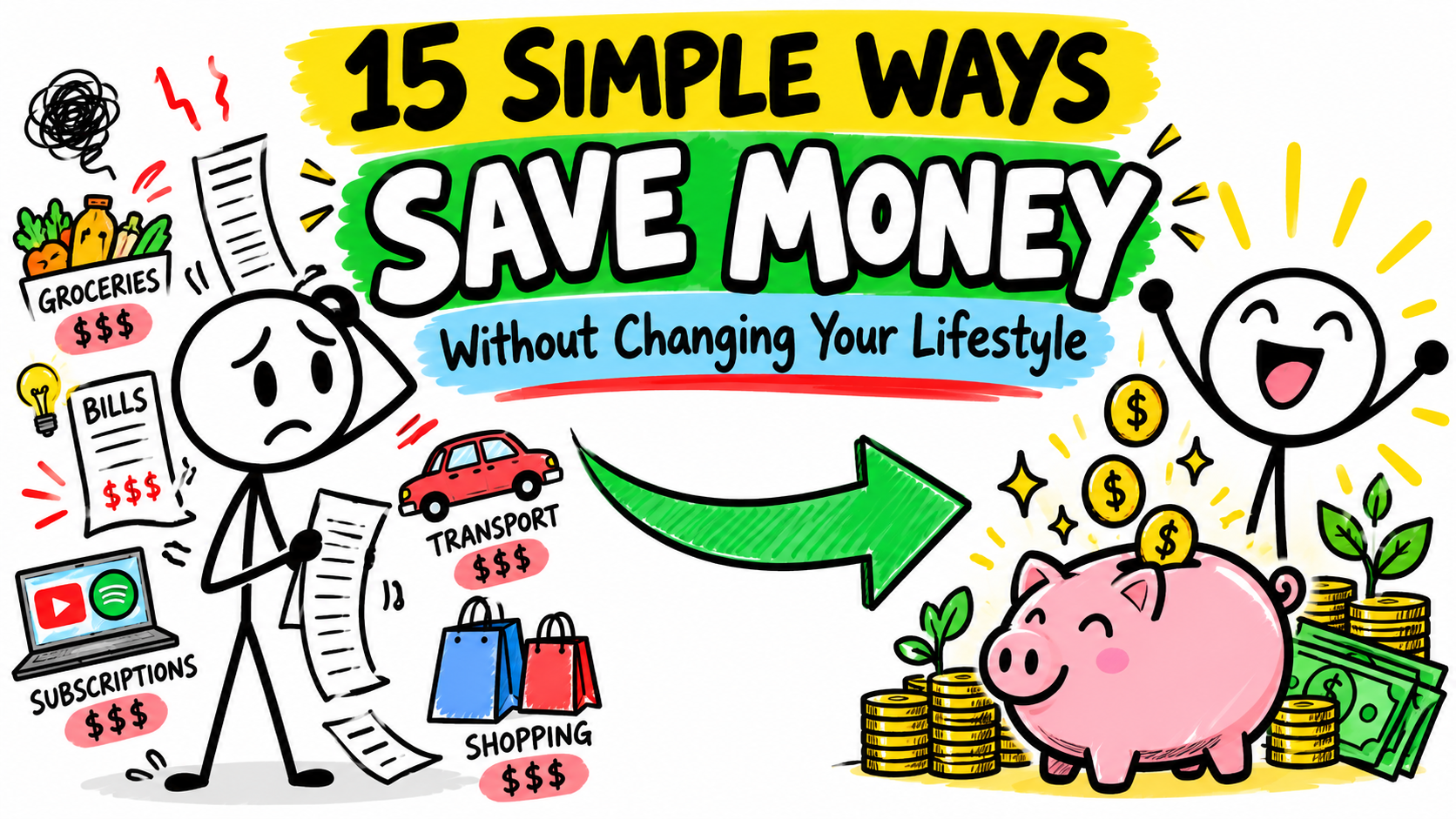
Here are 15 simple ways to save money without giving up the things you enjoy.
1. Track Your Daily Spending
One of the easiest ways to save money is to understand where your money goes.
Many people spend small amounts every day without noticing how much they add up.
For example, you may spend money on snacks, drinks, online shopping, or small personal items.
Try writing down everything you buy for one week.
You can use a notebook, a phone app, or a simple spreadsheet.
At the end of the week, review your spending.
You may discover that some purchases are not necessary.
Tracking your expenses helps you make better decisions without changing your normal activities.
2. Make a Shopping List Before Going to the Store
Shopping without a list can lead to buying things you do not need.
Before going to the supermarket or local market, check what you already have at home.
Then write down the items you need.
A shopping list helps you stay focused and avoid unnecessary purchases.
For example, if you only need rice, eggs, vegetables, and cooking oil, try to buy those items instead of adding extra products to your basket.
You can still enjoy your favorite foods while keeping your grocery spending under control.
3. Compare Prices Before Buying
You do not always have to buy the cheapest product to save money.
Sometimes, the same product is sold at different prices in different stores.
Before buying something, compare prices online or at nearby shops.
This is especially useful when purchasing:
- Groceries
- Household products
- Clothes
- Electronics
- Phone accessories
- Personal care products
For example, if one store sells a product for $15 and another sells the same product for $12, choosing the cheaper option saves you $3.
Be sure to consider delivery fees and product quality when comparing prices.
4. Reduce Food Waste at Home
Throwing away food is like throwing away money.
Many families buy more food than they need, and some of it goes bad before they can eat it.
To reduce food waste, start planning your meals and checking your refrigerator before shopping.
You can also:
- Store food properly.
- Use leftovers for another meal.
- Freeze suitable foods before they spoil.
- Buy fresh ingredients in realistic amounts.
- Check expiration and use-by dates.
For example, leftover vegetables can be used to make soup, fried rice, or another simple meal.
You do not need to eat less. You just need to make better use of the food you already buy.
5. Save Electricity Without Giving Up Comfort
Electricity is an important part of daily life, but wasting it can increase your monthly bills.
You can save electricity without making your home uncomfortable.
Start with small habits, such as turning off lights when leaving a room and using natural light during the day.
Other simple ideas include:
- Use LED light bulbs.
- Turn off unused fans.
- Unplug chargers when not needed.
- Use energy-saving settings on appliances.
- Clean air conditioner filters regularly.
- Set air conditioners to a comfortable, efficient temperature.
These small actions can help reduce electricity use over time.
You can still enjoy watching television, using your phone, or staying comfortable at home.
6. Review Your Monthly Subscriptions
Subscriptions are convenient, but paying for services you rarely use can waste money.
Take a few minutes to review your monthly payments.
You may have subscriptions for streaming, music, mobile apps, games, or online services.
Ask yourself whether you use each service regularly.
If you have two subscriptions that provide similar benefits, consider keeping only the one you enjoy most.
For example, canceling one unused $6 monthly subscription could save you $72 in a year.
You do not need to cancel everything. Keep the services that bring value to your life.
7. Use Discounts and Promotions Wisely
Discounts can help you save money on products you already plan to buy.
Many supermarkets, restaurants, and online stores offer special deals.
Before shopping, check whether there are discounts available for the items you need.
You can also use loyalty points or coupons when they are easy to access.
However, be careful.
A discount does not always mean you are saving money.
If you buy something you do not need simply because it is on sale, you are still spending money.
The best discount is one that helps you pay less for something you were already going to buy.
8. Bring a Reusable Water Bottle
Buying bottled water regularly can become expensive.
If you spend $1 on bottled water every day, that adds up to about $30 in a 30-day month.
Instead, consider carrying a reusable water bottle.
You can refill it with safe drinking water at home or at places where refills are available.
This simple habit can reduce spending while making it easier to stay hydrated.
It can also help reduce plastic waste.
You do not have to stop buying your favorite drinks. Just avoid spending money on bottled water when you already have access to safe drinking water.
9. Avoid Unnecessary Bank Fees
Bank fees may seem small, but they can reduce your savings over time.
Some banks charge fees for account maintenance, certain transfers, or using ATMs outside their network.
Review your bank account and check whether you are paying unnecessary fees.
You may be able to save money by:
- Using your bank’s own ATMs.
- Choosing an account with lower fees.
- Avoiding unnecessary transfers.
- Keeping track of your account balance.
- Using free banking services when available.
For example, avoiding two $2 fees each month could save you $48 in one year.
Always compare account terms before switching banks.
10. Wait Before Making Expensive Purchases
Sometimes, we buy things because they look attractive at the moment.
This is called impulse buying.
It often happens when shopping online or seeing special promotions.
A simple way to control impulse buying is to wait before purchasing nonessential items.
For example, if you see a pair of shoes that costs $50, wait 24 hours before making a decision.
During that time, ask yourself whether you truly need or want the item.
If you still want it and can afford it, you can decide whether to buy it.
Waiting gives you time to think carefully and helps prevent spending money on things you may later regret.
11. Take Care of the Things You Already Own
Replacing damaged or broken items can be expensive.
Taking care of your belongings can help them last longer.
For example:
- Clean your phone and electronic devices regularly.
- Follow the care instructions for your clothes.
- Keep your shoes clean and dry.
- Maintain your bicycle or motorbike.
- Repair small problems before they become expensive.
- Store household items properly.
If your belongings last longer, you may not need to replace them as often.
This allows you to save money without buying lower-quality products or changing your lifestyle.
12. Choose Store Brands When Possible
Many supermarkets sell their own brands of food and household products.
These products are sometimes cheaper than well-known brands.
For example, you may find lower-priced options for rice, soap, tissue paper, cleaning supplies, and other everyday items.
When shopping, compare the price, size, ingredients, and quality of similar products.
You may discover that a store-brand product meets your needs at a lower cost.
You do not have to stop buying your favorite brands.
Simply choose cheaper alternatives when the quality and value are similar.
13. Plan Your Transportation Costs
Transportation is another common monthly expense.
Whether you drive a car, ride a motorbike, or use public transportation, planning can help you save money.
For example, you can combine several errands into one trip.
Instead of going out three separate times to buy groceries, visit the bank, and collect a package, try to complete these tasks during one journey when practical.
This may help reduce fuel costs and save time.
You can also:
- Check tire pressure regularly.
- Maintain your vehicle.
- Avoid unnecessary trips.
- Compare available transportation options.
- Share rides when convenient and safe.
These small steps can reduce transportation expenses without affecting your daily routine too much.
14. Set Up Automatic Savings
Saving money becomes easier when you make it a regular habit.
If your bank supports automatic transfers, you can arrange for a small amount to move into your savings account every month.
For example, you might save $5, $10, or $20 whenever you receive your salary.
Choose an amount that does not prevent you from paying for food, rent, bills, and other important needs.
Even saving $10 per month can add up to $120 in one year, before any interest.
If automatic transfers are not available, you can manually set aside money on payday.
The important thing is to make saving part of your normal financial routine.
15. Create a Small Monthly Savings Goal
Saving money is often easier when you have a clear goal.
Instead of telling yourself, “I want to save more money,” choose a specific amount that works for your income.
For example, you could set a goal to save $20 each month.
Here is how small monthly savings can grow:
| Monthly Savings | Savings After 1 Year |
|---|---|
| $5 | $60 |
| $10 | $120 |
| $20 | $240 |
| $30 | $360 |
| $50 | $600 |
| $100 | $1,200 |
These examples assume you save the same amount every month and do not include interest.
You can use your savings for emergencies, education, travel, or other personal goals.
Remember that saving a small amount consistently is better than setting an unrealistic goal that you cannot maintain.
If your income is limited, start with what you can comfortably afford.
Why Small Money-Saving Habits Matter
You may wonder whether saving a few dollars is really worth the effort.
The answer is yes.
Small savings can add up over time, especially when you practice several good habits together.
For example, imagine you make these changes:
| Money-Saving Habit | Estimated Monthly Savings |
|---|---|
| Cancel an unused subscription | $6 |
| Reduce food waste | $10 |
| Avoid unnecessary fees | $4 |
| Spend less on bottled water | $10 |
| Buy everyday items at better prices | $10 |
| Total Monthly Savings | $40 |
In this example, you could save $40 per month or $480 in one year.
These figures are only examples. Your actual savings will depend on your current spending and the prices where you live.
The important lesson is that you do not need to make one big lifestyle change.
Several small improvements can help you keep more of your money.
How to Start Saving Money Today
If you want to save money without changing your lifestyle, start with one or two habits.
For example, this week you could track your expenses and review your subscriptions.
Next week, you could start comparing grocery prices and reducing food waste.
After that, you can create a small monthly savings goal.
Avoid trying to change everything at once.
Focus on habits that are easy to follow and fit your daily routine.
Over time, these small actions can become a normal part of your life.
Frequently Asked Questions (FAQs)
1. Can I save money without changing my lifestyle?
Yes. You can save money by avoiding waste, comparing prices, reducing unnecessary fees, and managing your expenses. These small improvements allow you to keep many of the activities and products you already enjoy.
2. What is the easiest way to save money every day?
Start by tracking daily spending. You can also bring a reusable water bottle, use shopping lists, and avoid unnecessary purchases. Choose the habits that work best for you.
3. How much money should I save every month?
The amount depends on your income and expenses. Some people can save $50 or more, while others may only be able to save $5 or $10. Start with an amount you can afford after covering essential expenses.
4. Is it possible to save money on a low income?
Yes, if your income leaves room for savings after essential bills. Small changes may help you reduce spending, but if your income does not cover basic needs, focus on financial stability and look for safe ways to increase your income before setting a savings target.
5. What expenses should I reduce first?
Start with expenses that do not provide much value, such as unused subscriptions, unnecessary bank fees, impulse purchases, and avoidable food waste. Try not to reduce spending on essential food, healthcare, or safety.
Saving money does not have to mean giving up your favorite activities or living an uncomfortable life.
Sometimes, the easiest way to save is to become more aware of your daily spending.
By comparing prices, reducing waste, managing subscriptions, and taking better care of your belongings, you can keep more money without making major sacrifices.
You do not need to follow all 15 tips immediately.
Start with a few simple habits and gradually add more when you feel comfortable.
Remember, saving money is not about spending nothing. It is about spending wisely and making better choices with the money you have.
With patience and consistency, small savings can grow into something meaningful and help you build a more secure financial future.