Saving money does not always require a high income or big changes in your life. Sometimes, small things you do every day can make a big difference in how much money you keep.
Many people want to save more money but find it difficult because of daily expenses. Food, transportation, shopping, and household bills can quickly use up most of their income.
The good news is that you can improve your financial situation by building simple money-saving habits.
You do not need to stop enjoying life or give up everything you love. You just need to make better choices about how you spend your money.
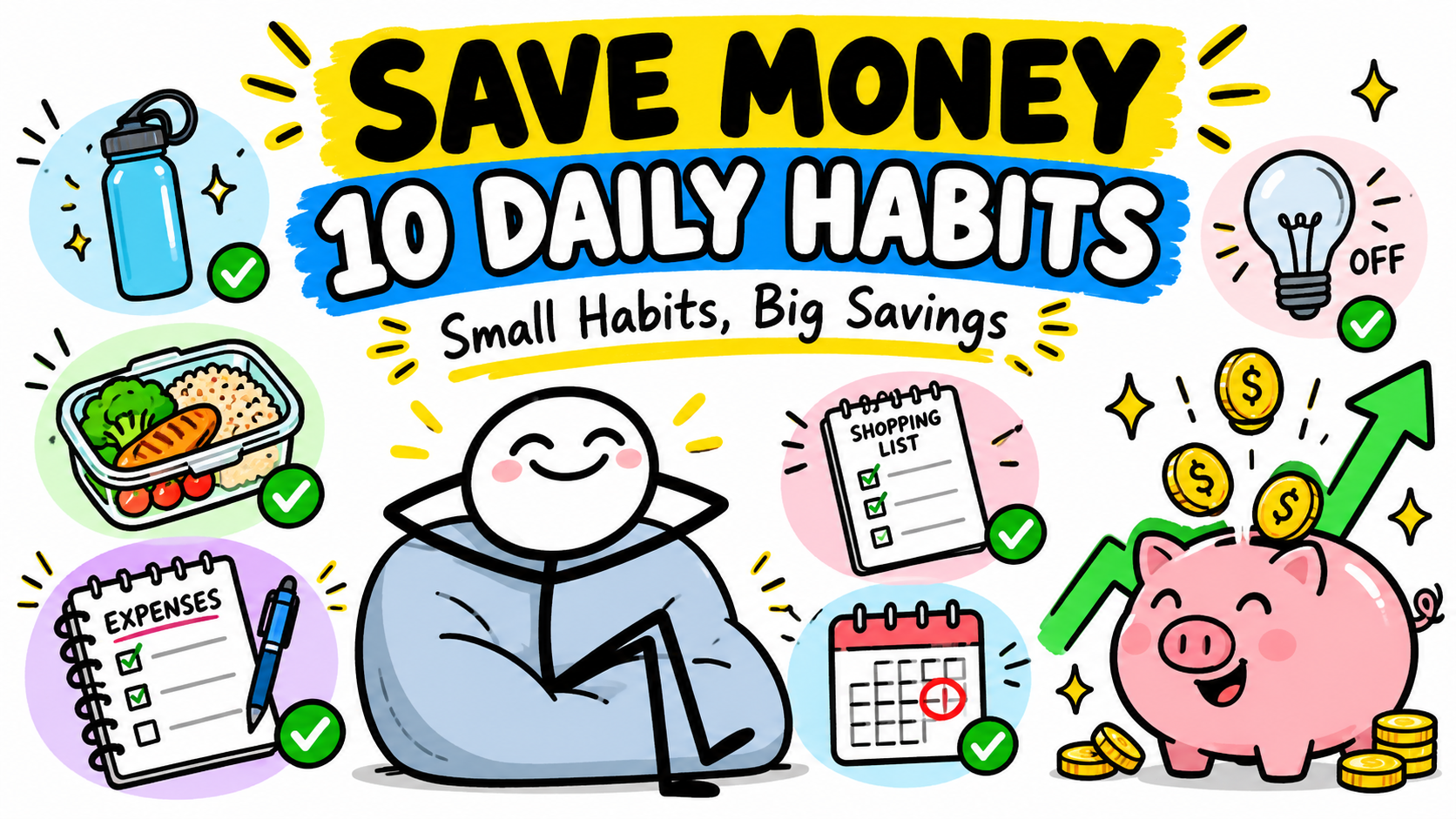
In this article, we will explore 10 daily habits that help you save more money, reduce unnecessary expenses, and build a healthier financial future.
1. Track Your Daily Expenses
One of the best habits for saving money is tracking what you spend every day.
Many people know how much money they earn each month, but they do not know exactly where their money goes.
Small expenses may seem unimportant, but they can add up over time.
For example, you might spend money on snacks, drinks, transportation, or online shopping without thinking much about it.
To improve this habit, write down everything you buy during the day.
You can use:
- A small notebook
- A budgeting app
- Your phone’s notes
- A simple spreadsheet
At the end of the day, review your spending.
Ask yourself which expenses were necessary and which ones you could avoid next time.
This simple habit helps you understand your spending and find opportunities to save money.
2. Think Before You Buy Something
Impulse buying is one of the common reasons people spend more money than planned.
It happens when you buy something because you want it at that moment, not because you actually need it.
For example, you might see a new shirt, a phone accessory, or a special online discount and decide to buy it immediately.
Later, you may realize that you did not really need the item.
A good habit is to pause before making a purchase.
Ask yourself three simple questions:
- Do I really need this?
- Can I afford it without affecting my budget?
- Can I wait until another day?
For items that are not urgent, consider waiting 24 hours before buying them.
This gives you time to think and may help you avoid unnecessary spending.
Remember, just because something is on sale does not mean you need to buy it.
3. Prepare More Food at Home
Buying food outside every day can become expensive.
Restaurants, takeaway meals, and food delivery services may cost more than preparing meals at home.
You do not have to stop eating at your favorite restaurants. However, cooking more often can help reduce your food expenses.
For example, if you usually spend $5 on lunch but can prepare a similar meal at home for $3, you could save $2 each time.
Doing this 20 times in a month could save you $40.
Your actual savings will depend on food prices and ingredients.
Here are some simple ideas:
- Prepare lunch before going to work.
- Cook enough food for more than one meal.
- Use leftover ingredients.
- Plan simple meals for the week.
- Buy affordable and nutritious food.
Cooking at home can also help you control your food portions and reduce waste.
The goal is not to stop enjoying food. It is to spend less when you can.
4. Carry a Reusable Water Bottle
Buying bottled water every day may seem like a small expense.
However, spending a little money daily can become a larger amount over time.
For example, if you spend $1 on bottled water every day, that adds up to $30 in a 30-day month.
Over one year, that could cost $365.
A simple way to reduce this expense is to carry a reusable water bottle.
Fill it with safe drinking water at home before leaving.
You can also refill it at work or other places that offer safe drinking water.
This habit can help you:
- Spend less on bottled water.
- Stay hydrated throughout the day.
- Reduce plastic waste.
- Avoid unnecessary purchases.
It is a small change that can become part of your normal routine.
5. Make a Daily Spending Plan
A daily spending plan helps you control how much money you use.
Instead of spending without thinking, decide how much you can afford to spend on everyday needs.
For example, you might set aside money for food, transportation, and small personal purchases.
Your daily spending limit should depend on your income and necessary expenses.
If you know that you only have $10 available for daily expenses, try to stay within that amount.
However, do not skip important needs just to meet a spending target.
You can also separate your money into different categories.
For example:
| Daily Expense | Planned Amount |
|---|---|
| Food | $5 |
| Transportation | $2 |
| Personal expenses | $2 |
| Savings | $1 |
| Total | $10 |
This is only an example and may not fit everyone’s living costs.
A spending plan helps you use your money more carefully and makes saving easier to manage.
6. Save a Small Amount Every Day
You do not need to save a large amount of money to build a good savings habit.
Even saving a small amount every day can help you make progress toward your financial goals.
For example:
| Daily Savings | 30-Day Savings | Yearly Savings |
|---|---|---|
| $0.50 | $15 | $182.50 |
| $1 | $30 | $365 |
| $2 | $60 | $730 |
| $3 | $90 | $1,095 |
| $5 | $150 | $1,825 |
These examples assume you save every day for 365 days in a year. They do not include interest.
If you save $1 per day, you could have $365 after one year.
That money could help cover an unexpected bill, pay for school supplies, or support another important goal.
If your income is limited, do not pressure yourself to save money every day.
You can save whenever you have enough left after paying for your basic needs.
The most important thing is to develop a habit you can maintain.
7. Avoid Wasting Electricity and Water
Saving money is not only about spending less when shopping.
It is also about reducing waste at home.
Electricity and water are necessary for daily life, but unnecessary use can increase monthly bills.
You can reduce waste by building simple habits.
For example:
- Turn off lights when leaving a room.
- Use natural light during the day.
- Switch off unused fans.
- Unplug devices that consume standby electricity when practical.
- Avoid leaving water running unnecessarily.
- Repair leaking taps.
- Use energy-efficient appliances when possible.
You do not need to stop using electricity or water to save money.
You simply need to avoid wasting them.
Over time, these small actions may help reduce your household expenses.
8. Use What You Already Have
Before buying something new, check whether you already have something that can do the same job.
Many people buy new products while similar items are sitting unused at home.
For example, you may buy new clothes even though you already have several outfits you rarely wear.
You may also buy groceries without checking what is left in your kitchen.
Develop a habit of checking what you own before spending money.
You can:
- Use ingredients already in your kitchen.
- Wear clothes you already have.
- Repair useful items when affordable.
- Finish household products before replacing them.
- Reuse suitable containers and shopping bags.
This does not mean you should never buy new things.
It simply means making the most of what you already have.
The less you waste, the less you may need to spend.
9. Look for Better Prices and Deals
Comparing prices is a useful habit that can help you save money without giving up the products you enjoy.
Sometimes, different stores sell the same product at different prices.
Before buying an item, check whether another store offers a better deal.
This is especially useful for:
- Groceries
- Household supplies
- Personal care products
- Clothes
- Electronics
- Everyday necessities
For example, if a product costs $10 at one shop and $8 at another, buying it for $8 saves you $2.
You can also compare prices per kilogram, liter, or item to find better value.
However, remember to consider transportation costs, delivery fees, and product quality.
Traveling far away to save a small amount may not always be worthwhile.
The goal is to get good value for your money, not simply to buy the cheapest product.
10. Review Your Spending Before Bed
One of the most helpful money-saving habits is taking a few minutes every evening to review your financial choices.
You do not need to spend a long time doing this.
Just five minutes can be enough to understand how you managed your money during the day.
Before going to bed, ask yourself:
- How much money did I spend today?
- Did I buy anything unnecessary?
- Did I stay within my budget?
- Was I able to save anything?
- What can I improve tomorrow?
For example, you may realize that you spent more than expected on snacks or transportation.
Instead of feeling disappointed, use that information to make a better plan for tomorrow.
Over time, reviewing your spending can help you become more aware of your financial habits.
It can also make saving money feel easier and more natural.
How Much Money Can Daily Habits Help You Save?
Small changes in your daily routine may help you save money over time.
Imagine you make the following improvements:
| Money-Saving Habit | Example Monthly Savings |
|---|---|
| Prepare more meals at home | $30 |
| Reduce unnecessary shopping | $20 |
| Carry a reusable water bottle | $10 |
| Reduce electricity and water waste | $5 |
| Compare prices when shopping | $10 |
| Total Monthly Savings | $75 |
In this example, you could save $75 per month.
Over 12 months, that would add up to $900.
These figures are only examples, not guaranteed savings. Your actual results depend on your income, expenses, habits, and local prices.
Even if you save much less, making small improvements can still support your financial goals.
The key is to choose habits that are realistic for your situation.
Why Daily Money-Saving Habits Are Important
Good financial habits help you become more responsible with your money.
When you make careful spending decisions every day, you may find it easier to manage your monthly income.
Here are some benefits of building money-saving habits.
1. Better money management
You understand where your money goes and learn how to control unnecessary spending.
2. Less financial stress
Having a clear plan for your money can help you feel more prepared for everyday expenses.
3. More emergency savings
Saving regularly can help you gradually build money for unexpected situations.
4. Greater financial confidence
Knowing that you are making thoughtful financial choices can help you feel more confident.
5. Progress toward personal goals
Your savings may help you pay for education, travel, important purchases, or future family needs.
These benefits do not happen overnight. They develop as you continue practicing better financial habits.
How to Build Money-Saving Habits That Last
Starting a new habit is easy, but maintaining it can be difficult.
If you try to change everything in one day, you may feel overwhelmed.
Instead, start with one or two habits that are easy for you.
For example, you can begin by tracking your spending and carrying a reusable water bottle.
After one week, try preparing more meals at home.
Later, you can add a daily spending plan and start saving a small amount whenever possible.
Here are some tips to stay consistent:
- Set simple and realistic goals.
- Make small changes rather than big sacrifices.
- Review your progress every week.
- Adjust your habits when your situation changes.
- Be patient with yourself.
Remember that financial progress takes time.
You do not need to be perfect every day to improve your money habits.
Personal Idea
Saving money does not have to be difficult or stressful.
You do not need to earn a high salary or completely change your lifestyle to start improving your financial habits.
Small daily actions, such as tracking expenses, preparing meals at home, reducing waste, and thinking before buying, can help you manage your money more effectively.
You do not have to follow all 10 habits immediately.
Start with one simple habit today and gradually add others as you become more comfortable.
Remember, saving more money is not always about earning more. It is also about making better decisions with the money you already have.
With patience, consistency, and a realistic plan, your small daily habits can help you build savings and work toward a more secure financial future.