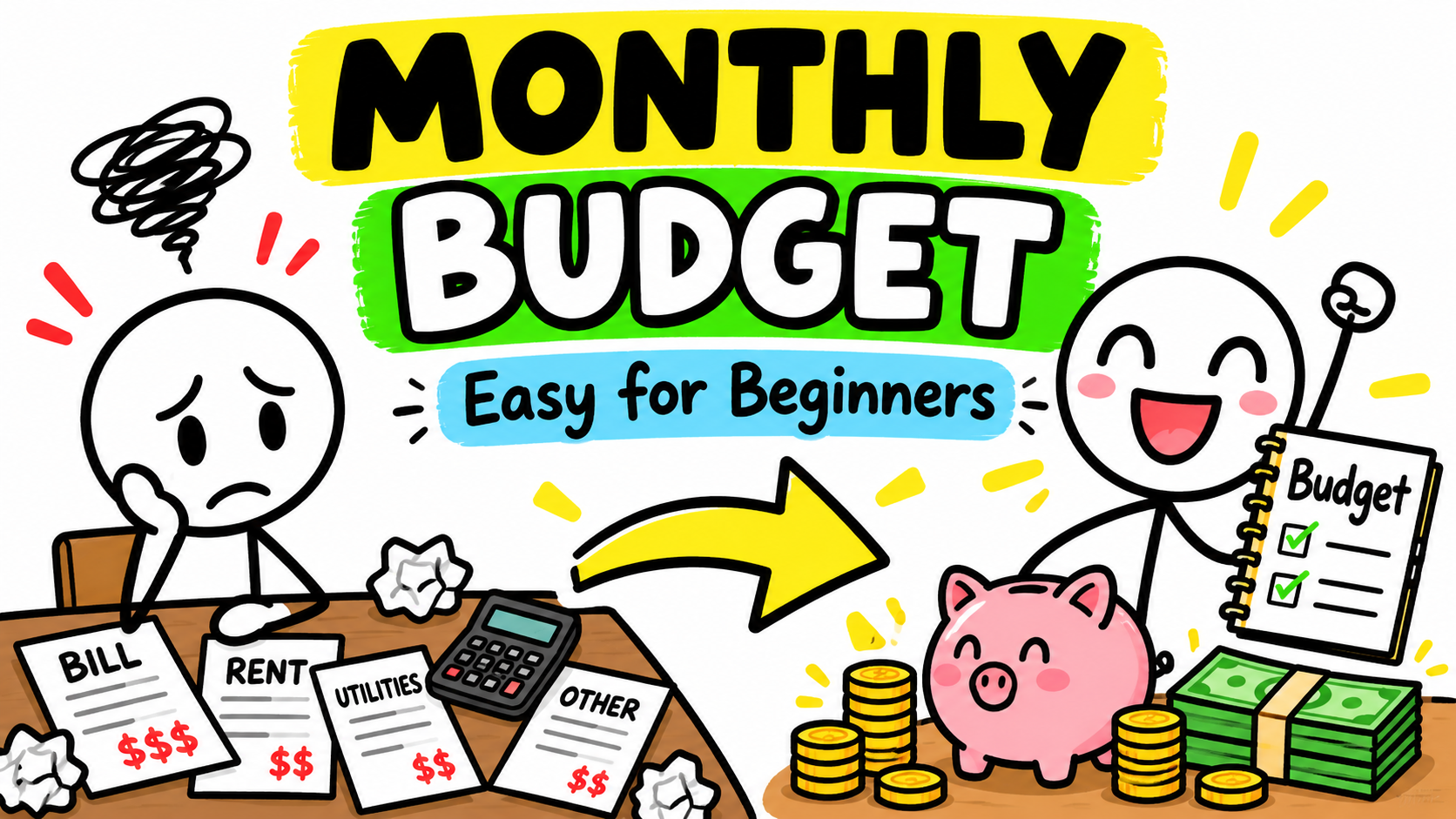
Managing money can be difficult, especially when you have bills to pay and many daily expenses. Sometimes, you may wonder where all your money went before the month is even over.
The good news is that you do not need to be a financial expert to manage your money better.
Creating a monthly budget is one of the simplest ways to take control of your finances. It helps you understand your income, organize your spending, and save money for the future.
Whether you have a low income, a full-time job, or an irregular salary, a simple budget can help you make better financial decisions.
In this article, you will learn how to create a monthly budget that actually works, even if you have never made one before.
1. Understand What a Monthly Budget Is
A monthly budget is a simple plan for how you will use your money each month.
It shows how much money you earn and how much you plan to spend on different things.
For example, your budget may include:
- Rent or housing payments
- Food and groceries
- Electricity and water
- Transportation
- Phone and internet
- Debt payments
- Personal spending
- Monthly savings
The main goal of budgeting is to make sure your spending does not exceed your income.
A budget also helps you prepare for unexpected expenses and avoid wasting money on things you do not need.
Think of a budget as a guide for your money. It tells you where your money should go instead of leaving you wondering where it went.
2. Calculate Your Total Monthly Income
Before creating a budget, you need to know how much money you receive each month.
Start by writing down all your sources of income.
These may include:
- Your monthly salary
- Part-time work
- Freelance income
- Small business income
- Other regular income
For example, imagine you earn:
| Income Source | Amount |
|---|---|
| Monthly salary | $500 |
| Part-time work | $100 |
| Total Monthly Income | $600 |
In this example, your total monthly income is $600.
Make sure you use your take-home income, which is the money you actually receive after taxes and other deductions.
If your income changes every month, use a conservative estimate based on your recent earnings.
This will help you avoid planning to spend money you might not receive.
3. Write Down All Your Monthly Expenses
The next step is to understand where your money goes.
Many people know how much they earn but do not know exactly how much they spend.
Start by listing all your regular expenses.
You can divide your expenses into two main groups.
Fixed Expenses
Fixed expenses are costs that usually stay the same every month.
Examples include:
- Rent
- Loan payments
- Insurance payments
- School fees
- Internet subscriptions
These expenses are often easier to plan because you already know how much you need to pay.
Variable Expenses
Variable expenses are costs that may change from month to month.
Examples include:
- Groceries
- Transportation
- Electricity
- Eating out
- Shopping
- Entertainment
For example, you might spend $100 on groceries one month and $130 the next month.
Tracking these expenses helps you understand your spending habits.
Helpful tip: Keep a record of your spending for at least one month. You can use a notebook, a simple spreadsheet, or a free budgeting app.
4. Separate Your Needs From Your Wants
One of the most important budgeting habits is understanding the difference between needs and wants.
Needs are essential expenses that help you live and meet your responsibilities.
Examples include:
- Basic food
- Housing
- Necessary transportation
- Electricity and water
- Healthcare
- Minimum debt payments
Wants are things you enjoy but can reduce or delay when money is limited.
Examples include:
- Eating at expensive restaurants
- Buying new clothes when you already have enough
- Entertainment subscriptions
- Buying the latest phone
- Unplanned online shopping
This does not mean you should stop enjoying your life.
It simply means you should pay for important things first.
For example, if you have $50 left after paying your bills, you might decide to save $30 and use $20 for personal enjoyment.
The goal is to create balance between your current needs and your future financial goals.
5. Choose a Simple Budgeting Method
There are different ways to create a monthly budget.
For beginners, it is best to choose a method that is easy to understand and maintain.
One popular method is the 50/30/20 budgeting rule.
This method divides your take-home income into three categories:
- 50% for needs: Rent, groceries, utilities, and essential expenses.
- 30% for wants: Entertainment, shopping, and other nonessential spending.
- 20% for savings and extra debt payments: Emergency savings, future goals, and paying more than the minimum on debt.
For example, if your monthly take-home income is $600:
| Category | Percentage | Amount |
|---|---|---|
| Needs | 50% | $300 |
| Wants | 30% | $180 |
| Savings and extra debt payments | 20% | $120 |
| Total | 100% | $600 |
However, this rule may not work for everyone.
If your rent and food already cost more than half your income, you may need to spend a larger percentage on essential expenses.
You can adjust the percentages to match your situation.
The best budget is not the one that follows a perfect rule. It is the one that works with your actual income and expenses.
6. Create Your First Monthly Budget
Now that you understand your income and expenses, it is time to create your first budget.
Let us use an example of someone earning $600 per month.
| Budget Category | Monthly Amount |
|---|---|
| Rent | $220 |
| Food and groceries | $130 |
| Transportation | $50 |
| Utilities and phone | $55 |
| Debt payments | $45 |
| Healthcare and personal needs | $35 |
| Savings | $30 |
| Entertainment | $20 |
| Extra money for unexpected costs | $15 |
| Total Budget | $600 |
This example shows how you can divide your income between different expenses.
Your budget may look different depending on where you live, your family size, and your financial responsibilities.
You can also change the amounts when needed.
For example, if transportation costs increase, you might reduce entertainment spending to cover the difference.
Remember that your budget should be flexible enough to fit your real life.
7. Set a Realistic Monthly Savings Goal
Saving money is an important part of a monthly budget.
However, you do not have to save a large amount to get started.
If you have a limited income, begin with a small goal that you can afford.
For example:
- Save $5 per month.
- Save $10 per month.
- Save $20 per month.
- Save $30 per month.
If you save $20 every month, you will have $240 after one year, not including any interest.
This money can help you pay for unexpected expenses or important future needs.
You can also set specific savings goals, such as:
- Building an emergency fund
- Buying necessary household items
- Paying for education
- Saving for travel
- Preparing for future family expenses
Try to keep your savings separate from the money you use for daily spending.
If you cannot afford to save during a difficult month, focus on essential expenses and return to your savings goal when possible.
8. Track Your Spending Every Week
Creating a budget is only the beginning.
You also need to check whether you are following it.
A simple way to do this is to review your spending once a week.
You can ask yourself:
- How much money have I spent?
- Am I staying within my budget?
- Did I buy anything unnecessary?
- Do I have enough money for the rest of the month?
- Can I save a little more?
For example, suppose you planned to spend $130 on groceries.
After two weeks, you have already spent $90.
This tells you that you have only $40 remaining for the rest of the month.
You can use this information to plan cheaper meals or reduce other spending where possible.
Regular tracking helps you notice problems early before they become bigger financial difficulties.
9. Prepare for Unexpected Expenses
Even with a good monthly budget, unexpected expenses can happen.
You may need to repair your phone, visit a doctor, or pay for urgent transportation.
These situations can affect your budget if you are not prepared.
That is why it helps to set aside some money for emergencies.
You can start with a small emergency fund of $50 or $100, depending on what you can afford.
Once you reach that amount, gradually increase your savings.
You should also plan for expenses that do not happen every month, such as annual fees, vehicle maintenance, or school supplies.
For example, if you expect a $120 expense once a year, you could try to set aside $10 each month.
Planning ahead can make these expenses easier to manage.
10. Review and Adjust Your Budget Every Month
Your financial situation may change over time.
You might receive a salary increase, lose some income, move to a new home, or face higher living costs.
Because of this, your budget should not stay exactly the same forever.
At the end of each month, review your plan.
Compare the amount you expected to spend with the amount you actually spent.
For example:
| Category | Planned | Actual |
|---|---|---|
| Groceries | $130 | $145 |
| Transportation | $50 | $45 |
| Entertainment | $20 | $10 |
| Savings | $30 | $30 |
In this example, grocery spending was $15 higher than planned.
However, transportation and entertainment costs were $15 lower in total.
This means the extra grocery spending was balanced by lower spending in other categories.
Small adjustments like these can help you create a better budget for the next month.
Do not worry if your budget is not perfect. What matters is learning from your spending habits.
Common Budgeting Mistakes Beginners Should Avoid
When you first start budgeting, you may make a few mistakes.
Here are some common ones to watch out for.
Making Your Budget Too Strict
A budget that leaves no room for personal spending may be difficult to maintain.
Try to include a small amount for things you enjoy when you can afford them.
Forgetting Small Expenses
Small purchases such as snacks, drinks, and delivery fees can add up over time.
Include these expenses when tracking your money.
Setting Unrealistic Savings Goals
Saving too much may leave you unable to pay important bills.
Choose an amount that fits your financial situation.
Not Planning for Irregular Expenses
Expenses such as repairs, school supplies, and annual payments can affect your finances.
Try to set aside a small amount each month for these costs.
Giving Up Too Early
Your first budget may not work perfectly.
Instead of giving up, adjust your spending plan and keep improving it.
Budgeting is a skill that becomes easier with practice.
Simple Monthly Budget Checklist for Beginners
Use this checklist when planning your monthly finances.
-
Calculate your total monthly take-home income.
-
List all fixed expenses.
-
Estimate variable expenses.
-
Separate needs from wants.
-
Choose a simple budgeting method.
-
Set realistic spending limits.
-
Include savings if affordable.
-
Prepare for unexpected expenses.
-
Track your spending every week.
-
Review and improve your budget each month.
Following these simple steps can help you build a budgeting habit that lasts.
Final Thoughts
Creating a monthly budget does not have to be complicated.
You do not need special financial knowledge or expensive tools to get started.
All you need is a clear understanding of your income, your regular expenses, and your financial priorities.
Start by writing down how much money you earn. Then organize your expenses, set realistic spending limits, and save a small amount when possible.
Remember that a good monthly budget is not about stopping yourself from spending money. It is about using your money wisely.
Your first budget may not be perfect, and that is completely normal.
With regular practice and small adjustments, you can build better financial habits and feel more confident about managing your money.
Start with a simple budget today, and improve it one month at a time.