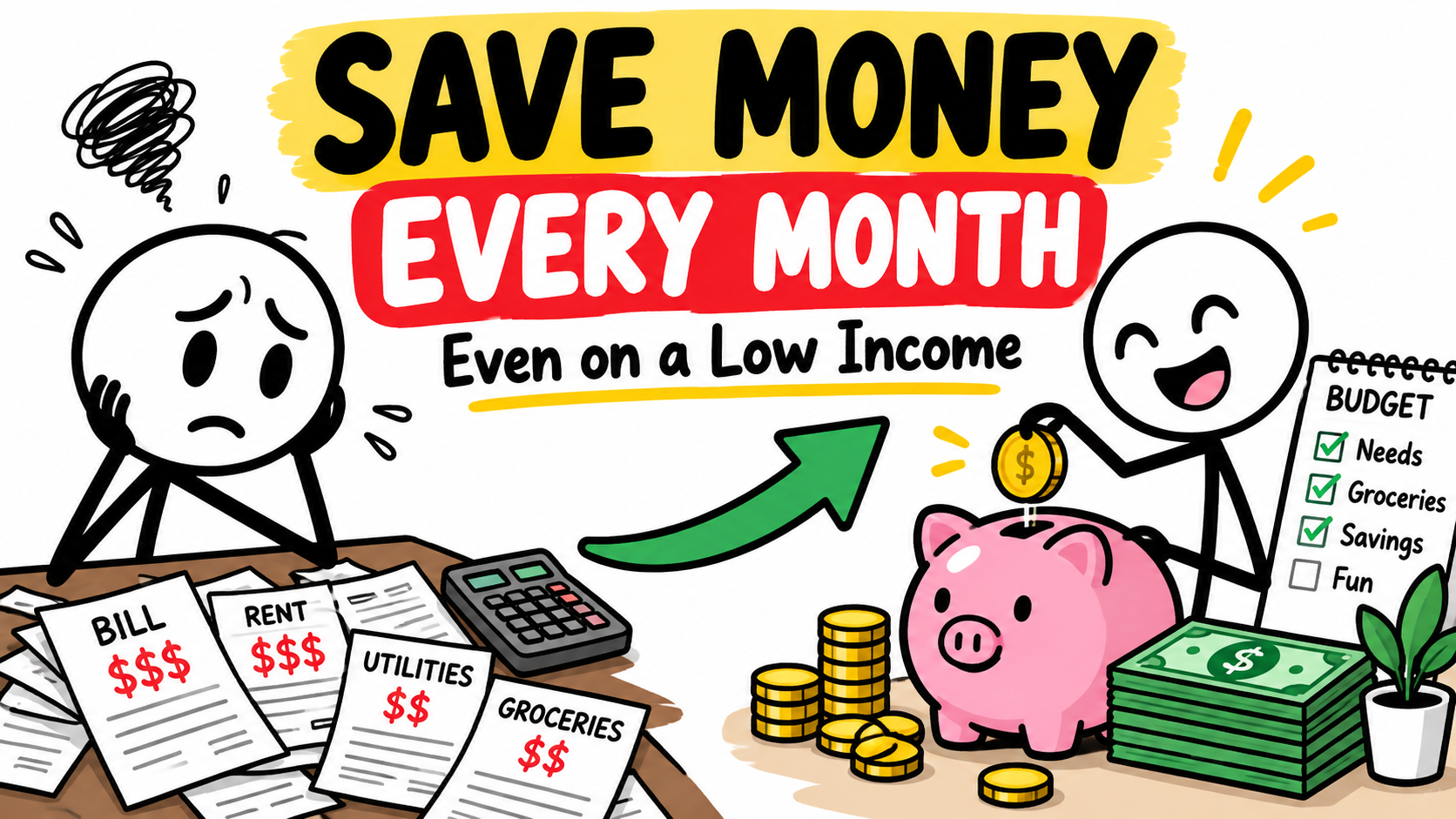
Saving money can be difficult when you earn a low income. After paying for rent, food, transportation, and other daily needs, you may have little money left.
However, you do not need to earn a lot of money to start saving. Even a small amount can make a difference over time.
The most important thing is to manage your money carefully, reduce unnecessary spending, and build good financial habits.
In this article, you will learn 10 simple ways to save money every month, even if your income is low.
1. Create a Simple Monthly Budget
The first step to saving money is knowing where your money goes.
A monthly budget helps you understand how much you earn, how much you spend, and how much you can save.
Start by writing down your monthly income. Then list your regular expenses, such as:
- Rent or housing payments
- Food and groceries
- Electricity and water
- Transportation
- Phone and internet
- Debt payments
- Other personal expenses
For example, if you earn $500 per month, you can create a budget like this:
| Expenses | Monthly Amount |
|---|---|
| Rent | $200 |
| Food | $120 |
| Transportation | $50 |
| Electricity, water, and phone | $60 |
| Debt payments | $40 |
| Savings | $20 |
| Other expenses | $10 |
| Total | $500 |
This is only an example. Your actual budget will depend on your income, family size, and living costs.
A budget does not have to be perfect. Its purpose is to help you make better decisions about your money.
2. Start Saving Small Amounts
Many people believe they need to save hundreds of dollars every month. This is not true.
You can start saving with just $1, $2, or $5 whenever you can afford it.
For example:
- Save $5 every week = $20 in four weeks.
- Save $10 every month = $120 in one year.
- Save $20 every month = $240 in one year.
These amounts may seem small, but they can help you pay for unexpected expenses in the future.
The secret to saving money is not how much you save at the beginning. It is building a habit you can maintain.
If you cannot save anything during a difficult month, focus on covering your basic needs first. You can start again when your situation improves.
3. Reduce Unnecessary Spending
One of the easiest ways to save money is to spend less on things you do not really need.
Small expenses can add up without you noticing.
For example, buying snacks, drinks, or other small items every day may cost more than you expect.
Before buying something, ask yourself:
- Do I really need this?
- Can I wait until next week?
- Is there a cheaper option?
- Do I already have something similar?
You do not have to stop buying everything you enjoy. Instead, try to avoid purchases that do not add much value to your life.
Even reducing unnecessary spending by $10 or $20 per month can help you save more.
4. Cook More Meals at Home
Food is one of the biggest monthly expenses for many families.
Eating at restaurants or ordering food regularly can be expensive, especially when you have a limited budget.
Cooking at home can often help you spend less.
Here are some simple ways to reduce food expenses:
- Plan your meals before shopping.
- Buy ingredients that can be used for several meals.
- Cook enough food for more than one meal when safe to store.
- Use leftovers instead of throwing them away.
- Choose affordable and nutritious foods.
- Avoid shopping when you are hungry.
For example, rice, eggs, vegetables, beans, and other basic ingredients can be used to prepare different meals without spending too much.
You do not need expensive food to enjoy a healthy meal.
Planning your meals can help you save money and reduce food waste.
5. Make a Shopping List Before Buying Groceries
Going shopping without a plan can lead to unnecessary spending.
You may buy products that look interesting but are not really needed.
Before visiting a supermarket or local market, check what you already have at home.
Then write down the items you need.
Try to follow your shopping list as closely as possible.
You can also compare prices between stores, check discounts, and consider buying larger quantities of products you use regularly when the unit price is lower.
However, do not buy something simply because it is on sale.
A discount only saves you money if you actually need the product.
This simple habit can make grocery spending easier to control.
6. Save Money on Electricity and Water
Utility bills can take a large part of your monthly income.
The good news is that small changes at home may help reduce these bills.
Here are some easy ways to save electricity:
- Turn off lights when leaving a room.
- Unplug devices that use standby power when practical.
- Use energy-efficient light bulbs.
- Use fans instead of air conditioning when comfortable.
- Set air conditioners to a reasonable temperature.
- Use natural light during the day.
You can also reduce water expenses by fixing leaks, turning off taps when not needed, and avoiding unnecessary water use.
These actions may not save a large amount immediately, but they can help lower your monthly expenses over time.
7. Avoid Buying Things on Impulse
Impulse buying happens when you purchase something without planning.
For example, you may see a new pair of shoes, a phone accessory, or an online promotion and decide to buy it immediately.
Later, you may realize you did not really need it.
One simple way to avoid impulse buying is to use the 24-hour rule.
When you want to buy something that is not essential, wait at least 24 hours before making a decision.
During that time, ask yourself whether the item is worth the money.
You may discover that you no longer want it.
For larger purchases, consider waiting several days.
This habit can help you control spending and save money for more important needs.
8. Reduce Monthly Subscriptions
Many people pay for services they rarely use.
These may include:
- Streaming services
- Music subscriptions
- Mobile applications
- Online memberships
- Extra internet or phone packages
Although each subscription may seem inexpensive, paying for several services every month can become costly.
Review your subscriptions and ask yourself which ones you use regularly.
If you are paying for services you no longer need, consider canceling them.
For example, canceling two unused subscriptions costing $5 each could save you $10 per month or $120 in one year.
You can use that money to build your savings instead.
9. Build a Small Emergency Fund
An emergency fund is money you keep for unexpected situations.
These may include medical expenses, urgent home repairs, or losing your job.
Without emergency savings, even a small problem can create financial stress.
You do not need to save a large amount immediately.
Start with a small goal, such as $50 or $100, if that is realistic for your income.
Once you reach your first goal, you can gradually increase it.
Keep your emergency money somewhere safe and accessible, such as a separate savings account with low or no fees.
Try not to use this money for regular shopping or entertainment.
Having even a small emergency fund can make unexpected expenses easier to manage.
10. Look for Simple Ways to Increase Your Income
Sometimes, reducing expenses is not enough.
If your income barely covers your basic needs, finding ways to earn additional money may help improve your financial situation.
You can explore simple opportunities based on your skills and available time.
Some examples include:
- Selling homemade food
- Offering tutoring services
- Doing freelance writing or design
- Selling items you no longer use
- Providing cleaning or other local services
- Learning useful skills for better job opportunities
You do not need to start a large business.
Even a small amount of additional income can help you pay bills, reduce debt, or increase savings.
However, be careful with opportunities that promise quick profits or require large upfront payments.
Choose work that is realistic, safe, and suitable for your situation.
How Much Money Should You Save Every Month?
There is no perfect savings amount for everyone.
Some financial advice suggests saving 20% of your income. However, this may be difficult for people earning a low income.
Instead of following a strict rule, choose an amount that fits your budget.
For example:
| Monthly Income | 5% Savings |
|---|---|
| $200 | $10 |
| $300 | $15 |
| $400 | $20 |
| $500 | $25 |
| $600 | $30 |
| $800 | $40 |
| $1,000 | $50 |
This table shows what saving 5% of your income would look like. It is not a requirement.
If you can only save 1% or 2%, that is still a good starting point.
If your income changes every month, you can choose a smaller savings amount during difficult months and save more when you earn extra money.
Your basic needs should always come first.
Common Mistakes to Avoid When Saving Money
When trying to save money, it is easy to make mistakes that slow down your progress.
Some common mistakes include:
Saving too much too quickly: Setting an unrealistic savings goal may leave you without enough money for daily needs.
Not tracking expenses: Without knowing where your money goes, it is difficult to improve your spending habits.
Using savings for unnecessary purchases: This can prevent your emergency fund from growing.
Ignoring expensive debt: High-interest debt can grow quickly. Paying it down may be more important than building large savings.
Giving up after one difficult month: Financial progress is not always smooth. You can adjust your savings plan whenever necessary.
Avoiding these mistakes can help you create a more realistic financial plan.
Frequently Asked Questions (FAQs)
Can I save money if I earn very little?
Yes, but it depends on your expenses. If your income covers your essential needs, you may be able to save a small amount. If you cannot afford to save right now, focus on meeting your basic needs and improving your financial situation first.
Is saving $10 a month worth it?
Yes. Saving $10 every month adds up to $120 in one year, without interest. It can also help you build a regular saving habit.
What is the easiest way to save money?
Start by tracking your spending and identifying one expense you can reduce. You can also set aside a small amount whenever you receive your income, as long as your essential bills remain covered.
Should I save money or pay off debt first?
It depends on your situation. Building a small emergency fund can help you handle unexpected expenses, while paying off high-interest debt can reduce future costs. A combination of both may work best for some people.
How can I save money without changing my lifestyle too much?
Start with small changes, such as canceling unused subscriptions, planning grocery shopping, reducing food waste, and comparing prices. These habits can help you spend less without giving up everything you enjoy.
Final Thoughts
Saving money on a low income is not always easy, but small changes can make a meaningful difference.
You do not have to save a large amount every month to improve your financial future.
Start with a simple budget, reduce unnecessary expenses, cook more meals at home, and build a small emergency fund when you can afford to.
Remember that saving money is about making steady progress, not becoming rich overnight.
Some months will be easier than others, and that is normal.
The most important thing is to create realistic financial habits that work for your income and your daily life.
With patience, planning, and consistent effort, you can gradually build savings and feel more confident about managing your money.