Managing money can be difficult, especially when you have bills to pay, groceries to buy, and other daily expenses. Many people work hard every month but still struggle to save money or feel financially secure.
Sometimes, the problem is not just how much money you earn. It can also be how you manage the money you have.
Small budgeting mistakes may lead to unnecessary spending, unpaid bills, and financial stress.
However, financial problems are not always caused by poor money habits. Low wages, high living costs, unexpected expenses, and family responsibilities can also make budgeting difficult.
The good news is that improving your budgeting habits can help you make better financial decisions.
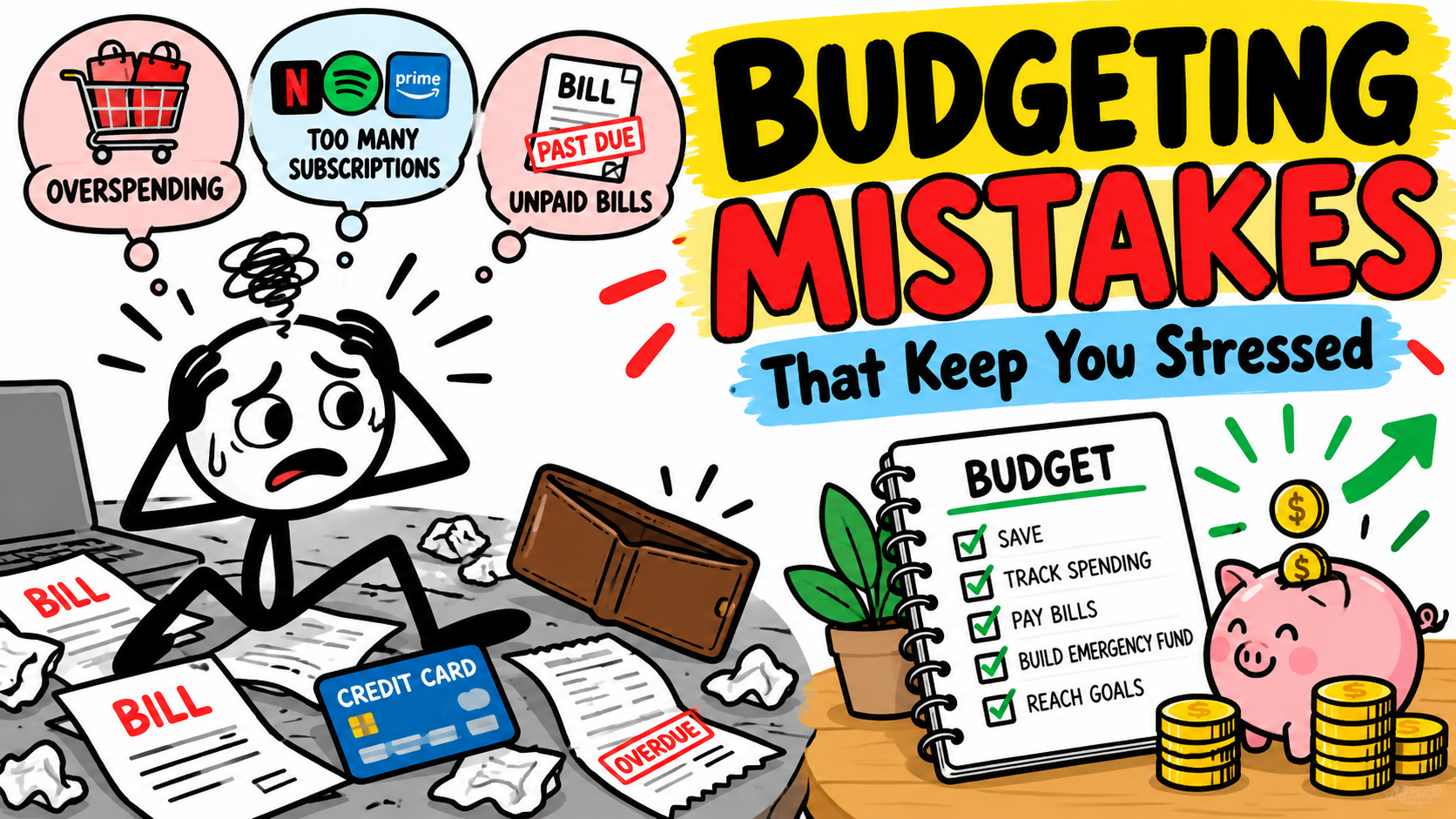
In this article, we will explore 10 common budgeting mistakes that keep people financially stressed and simple ways to avoid them.
1. Not Creating a Monthly Budget
One of the biggest budgeting mistakes is spending money without having a clear plan.
When you do not know how much money you earn and spend, it becomes difficult to control your finances.
For example, you may receive your salary at the beginning of the month and spend money on shopping, food, and entertainment. By the end of the month, you may not have enough money to pay an important bill.
A monthly budget helps you understand where your money goes.
How to avoid this mistake:
Start by writing down your monthly income and expenses.
Your budget should include:
- Rent or housing payments
- Food and groceries
- Transportation
- Electricity and water
- Phone and internet
- Debt payments
- Personal spending
- Savings, if affordable
You can use a notebook, spreadsheet, or budgeting app.
A simple budget can help you make better spending decisions and prepare for upcoming expenses.
2. Ignoring Small Daily Expenses
Small purchases may not seem important, but they can add up over time.
For example, you might spend money on snacks, drinks, delivery fees, or other small items every day.
Spending $3 a day for 20 days equals $60.
That is $60 you might have used for groceries, bills, or savings.
Many people focus only on large expenses while forgetting about these smaller purchases.
How to avoid this mistake:
Track your daily spending for at least one month.
Write down every purchase, including small items.
At the end of the month, review your spending and identify expenses you can reduce.
You do not need to stop buying everything you enjoy. The goal is to understand your spending habits and avoid purchases that do not fit your budget.
3. Setting an Unrealistic Budget
Some people create very strict budgets because they want to save money quickly.
For example, they may decide to spend only $50 on groceries even though their household normally needs $150 for basic food.
When their budget is too restrictive, they may struggle to follow it.
After several weeks, they might give up budgeting completely.
A budget should help you manage money, not make daily life unnecessarily difficult.
How to avoid this mistake:
Create a realistic budget based on your actual income and living expenses.
Start by reviewing how much you normally spend on essential items.
Then look for reasonable ways to reduce costs without sacrificing important needs.
If you want to save money, start with a small amount you can afford.
Remember, a budget that works for your real life is better than a perfect-looking budget you cannot follow.
4. Spending on Wants Before Needs
Another common budgeting mistake is spending money on things you want before paying for things you need.
Needs are expenses that are necessary for everyday living.
These usually include housing, basic food, utilities, transportation to work, and essential healthcare.
Wants are things that may make life more enjoyable but are not always necessary.
Examples include entertainment, expensive accessories, or frequent restaurant meals.
There is nothing wrong with spending money on things you enjoy. However, problems can happen when these purchases leave you without enough money for essential expenses.
How to avoid this mistake:
Before spending money, ask yourself:
- Is this something I really need?
- Have I paid my important bills?
- Can this purchase wait?
- Is there a more affordable option?
Pay attention to essential expenses first.
If you have money left after covering your needs and financial commitments, you can decide how much to spend on personal enjoyment.
5. Forgetting About Unexpected and Irregular Expenses
Many people prepare budgets only for expenses they pay every month.
However, some expenses happen only a few times a year.
Examples include:
- Vehicle repairs
- School supplies
- Annual insurance payments
- Medical expenses
- Home maintenance
- Holiday spending
These costs can create financial stress when they are not included in your budget.
For example, if your annual insurance payment is $120, setting aside $10 each month can help you prepare for that bill.
How to avoid this mistake:
Make a list of expenses that do not happen every month.
Estimate how much each expense may cost and when it will need to be paid.
Then divide the expected amount by the number of months you have to prepare.
This method helps you spread larger expenses over time instead of paying everything from one month’s income.
6. Not Building an Emergency Fund
Life does not always go according to plan.
You may face unexpected medical bills, sudden job loss, urgent repairs, or other financial problems.
Without emergency savings, these situations can become even more stressful.
Some people may need to borrow money or use credit cards to cover unexpected expenses.
An emergency fund can help reduce this pressure.
How to avoid this mistake:
Start building a small emergency fund when your budget allows it.
Your first goal could be $50, $100, or another amount that is realistic for your income.
For example, saving $10 per month would give you $120 after one year, assuming you do not withdraw any money.
Keep your emergency savings in a safe place where you can access them when needed.
If you cannot afford to save right now, focus on essential expenses first. You can begin building your emergency fund when your financial situation improves.
7. Relying Too Much on Credit Cards or Loans
Borrowing money is not always a bad decision. Loans and credit cards can be useful in certain situations.
However, relying on borrowed money to cover regular expenses can become risky, especially when you cannot repay it on time.
Interest charges and fees may increase the amount you owe.
For example, using a credit card to buy unnecessary items may create financial problems if you only make minimum payments each month.
Over time, debt payments can take a large part of your income.
How to avoid this mistake:
Before borrowing money, consider whether you can afford the repayments.
Try to avoid using credit for purchases that are not necessary.
If you already have debt, write down:
- The amount you owe
- The interest rate
- The minimum monthly payment
- The payment due date
Make required payments on time whenever possible.
If you have extra money available, consider paying down high-interest debt faster. This may help reduce the total interest you pay.
8. Forgetting to Review Monthly Subscriptions
Many people pay for subscriptions without checking whether they still use the services.
These may include streaming platforms, mobile applications, online memberships, or other monthly services.
A subscription may seem cheap, but several small payments can take a noticeable amount from your budget.
For example, three subscriptions costing $5 each add up to $15 per month.
That is $180 in one year.
If you rarely use these services, the money could be spent on something more important.
How to avoid this mistake:
Check your bank statements or payment history to identify recurring charges.
Ask yourself whether you still need each service.
Consider canceling subscriptions that you rarely use or switching to a cheaper plan.
Reviewing subscriptions every few months can help you avoid paying for services you no longer need.
9. Not Adjusting Your Budget When Life Changes
Your financial situation may change over time.
You might receive a salary increase, lose some working hours, move to a new home, or have additional family responsibilities.
Food prices, rent, and utility bills may also increase.
A budget that worked six months ago may no longer fit your current situation.
Continuing to follow an outdated budget can make it harder to manage your money.
How to avoid this mistake:
Review your budget at least once a month.
Compare your planned expenses with what you actually spent.
Ask yourself:
- Did my income change?
- Are my living expenses increasing?
- Am I spending too much in one category?
- Do I need to change my savings goal?
- Are there new bills I should prepare for?
Make changes when necessary.
A good budget should be flexible enough to support your changing needs.
10. Giving Up After One Bad Month
Budgeting is not always easy.
You may spend more than planned, face an unexpected bill, or fail to reach your savings goal.
Some people become discouraged and stop budgeting after making a mistake.
However, one difficult month does not mean your entire financial plan has failed.
Budgeting is a skill that improves with practice.
How to avoid this mistake:
When you go over budget, review what happened.
Try to understand whether the problem came from unexpected costs, unrealistic spending limits, or unnecessary purchases.
Use that information to improve your plan for the following month.
Do not try to fix every financial problem immediately.
Start with small changes and build better habits over time.
The goal of budgeting is not to be perfect. It is to make steady progress toward better financial management.
Example of a Simple Monthly Budget
Understanding budgeting mistakes is useful, but creating a practical budget is even more important.
Suppose you earn $600 per month.
Here is an example of how you might organize your money:
| Expense Category | Monthly Amount |
|---|---|
| Rent | $200 |
| Food and groceries | $150 |
| Transportation | $60 |
| Electricity and water | $40 |
| Phone and internet | $20 |
| Debt payments | $50 |
| Emergency savings | $30 |
| Personal expenses | $50 |
| Total | $600 |
This is only an example, not a recommended budget for everyone.
Your spending plan will depend on your income, location, household needs, and existing financial commitments.
The important thing is to make sure your planned expenses do not exceed the money available.
If your income is not enough to cover essential costs, reducing small purchases alone may not solve the problem. You may also need to look for income opportunities, financial assistance, or more affordable arrangements where available.
How to Build Better Budgeting Habits
Avoiding common mistakes is a good start, but building consistent habits is what makes budgeting useful over time.
Here are five simple actions you can take:
- Track your money: Record your income and expenses so you know where your money goes.
- Pay essential bills first: Make housing, food, utilities, and other necessary expenses your priority.
- Set realistic savings goals: Save what you can afford without neglecting your basic needs.
- Review your budget regularly: Check your spending every week or month.
- Make gradual improvements: Focus on manageable changes instead of trying to change everything at once.
These habits can help you become more organized and make more informed financial decisions.
Final Thoughts
Budgeting is an important part of managing your personal finances, but it does not have to be complicated.
Many common budgeting mistakes, such as ignoring small expenses, forgetting irregular bills, overspending, and failing to review your budget, can make financial management more difficult.
The good news is that these habits can be improved with awareness and practice.
Start by understanding where your money goes. Create a realistic spending plan, prioritize your essential needs, and prepare for future expenses whenever possible.
Remember that a good budget is not about restricting every purchase. It is about helping you use your money wisely and reducing avoidable financial stress.
You do not need to change everything in one day.
By making small, consistent improvements, you can gradually build stronger money habits and feel more confident about your financial future.