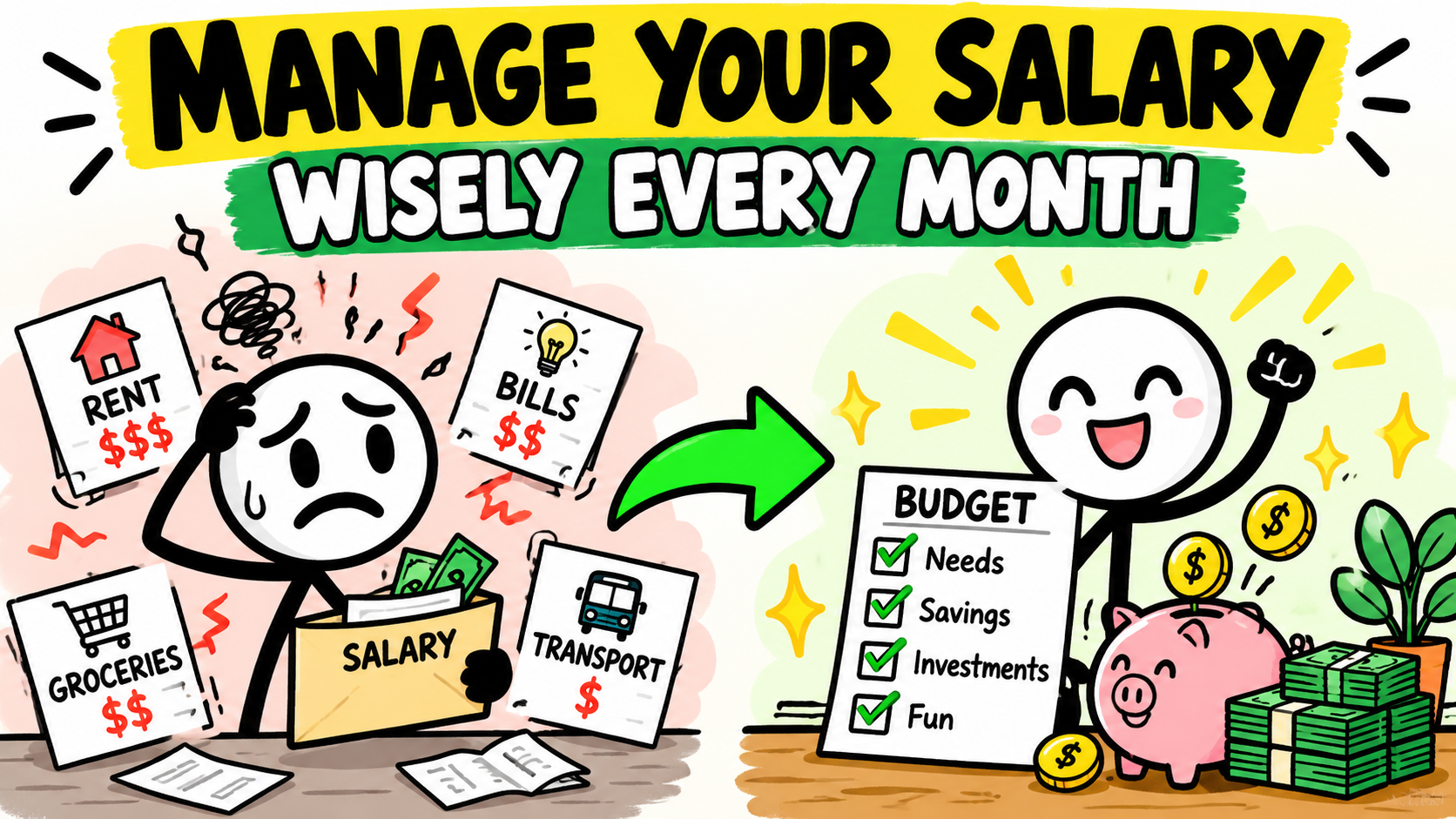
Getting your salary is always a good feeling. After working hard for an entire month, you finally receive the money you earned. But sometimes, that money seems to disappear faster than expected.
You pay rent, buy groceries, cover your bills, and spend on daily needs. Before the next payday arrives, you may have very little money left.
If this sounds familiar, you are not alone. Many people find it difficult to manage their monthly income, especially when living costs are high.
The good news is that you do not need to earn a large salary to start managing your money better.
Learning how to manage your salary wisely can help you control your spending, reduce financial stress, and build savings for the future.
In this article, we will share 10 simple and practical ways to manage your salary every month, even if you earn a modest income.
1. Know Exactly How Much Money You Earn
The first step to managing your salary is understanding how much money you actually receive each month.
Your salary may look different before and after taxes, insurance, or other deductions.
For example, your monthly salary might be $600, but after deductions, you receive only $550.
In this situation, you should plan your budget based on $550, not $600.
This is called your take-home pay, which means the money you actually receive after deductions.
If you earn extra income from part-time work or other activities, you can include the amount you reasonably expect to receive.
However, avoid depending on bonuses or uncertain income to pay your regular bills.
Knowing your real monthly income helps you create a budget you can afford.
2. Create a Monthly Budget Before Spending
One of the most effective ways to manage your salary is to create a monthly budget.
A budget is simply a plan for how you will use your money.
It helps you decide how much to spend on important expenses and how much to save.
Start by listing your monthly expenses, such as:
- Rent or housing payments
- Food and groceries
- Electricity and water
- Transportation
- Phone and internet
- Debt payments
- Personal spending
- Savings
For example, imagine you receive a take-home salary of $600 per month.
Your budget could look like this:
| Monthly Expenses | Amount |
|---|---|
| Rent | $220 |
| Food and groceries | $140 |
| Electricity and water | $45 |
| Transportation | $50 |
| Debt payments | $50 |
| Phone and internet | $20 |
| Savings | $30 |
| Personal spending | $25 |
| Unexpected expenses | $20 |
| Total | $600 |
This is only an example. Your actual spending will depend on where you live, your family responsibilities, and your financial situation.
The important thing is to make sure your planned expenses do not exceed your income.
A good budget helps you understand where your money goes instead of wondering where it disappeared.
3. Pay Your Important Bills First
When you receive your salary, it can be tempting to buy something you have wanted for a long time.
However, spending too much immediately after payday can cause problems later in the month.
A better habit is to pay your essential bills first.
These usually include rent, electricity, water, groceries, transportation, and required debt payments.
For example, if your rent is due at the beginning of the month, set aside that money as soon as you get paid.
You can also keep a list of bill payment dates to avoid forgetting them.
Paying bills on time can help you avoid late fees and unnecessary financial stress.
Once your important expenses are covered, you will have a clearer idea of how much money is available for other things.
Always give your needs priority over your wants.
4. Try the 50/30/20 Budgeting Rule
The 50/30/20 rule is a popular way to divide your income into three main categories.
It suggests using:
- 50% for needs: Rent, food, transportation, and essential bills.
- 30% for wants: Entertainment, eating out, shopping, and hobbies.
- 20% for savings and extra debt payments: Emergency savings, future goals, and paying down debt beyond required minimum payments.
For example, if your take-home salary is $1,000 per month, the rule suggests:
| Category | Amount |
|---|---|
| Needs (50%) | $500 |
| Wants (30%) | $300 |
| Savings and extra debt payments (20%) | $200 |
| Total | $1,000 |
However, this rule does not work perfectly for everyone.
If your salary is low and your essential expenses already take up 80% of your income, saving 20% may not be realistic.
You can adjust the percentages based on your situation.
For example, you might spend 80% on needs, 15% on wants, and 5% on savings if that fits your budget.
The goal is not to follow a perfect formula. It is to find a simple system that helps you manage your money responsibly.
5. Save a Small Amount Every Payday
Saving money is an important part of managing your salary.
Many people plan to save whatever money remains at the end of the month. However, there may be nothing left after paying for daily expenses.
A useful alternative is to set aside a small amount when you receive your salary, after making sure your essential expenses can be covered.
You do not need to save hundreds of dollars.
For example:
- Saving $10 every month gives you $120 in one year.
- Saving $20 every month gives you $240 in one year.
- Saving $50 every month gives you $600 in one year.
These calculations do not include any interest you might earn.
If possible, keep your savings in a separate account so you are less likely to spend them accidentally.
You can also set up an automatic transfer if your bank offers this service without costly fees.
Remember, saving a small amount regularly is often better than setting a large savings goal you cannot afford.
6. Control Your Daily Spending
Small daily purchases can have a big impact on your monthly salary.
For example, spending $3 on unnecessary purchases every day adds up to $90 over 30 days.
That money could help cover groceries, transportation, or savings.
Start paying attention to where your money goes each day.
You may notice that some spending habits are costing more than expected.
Here are a few simple ways to reduce daily expenses:
- Bring homemade meals to work when practical.
- Carry drinking water instead of buying bottled drinks regularly.
- Make a shopping list before visiting stores.
- Avoid buying things just because they are discounted.
- Compare prices before purchasing expensive items.
- Cancel subscriptions you no longer use.
You do not need to stop enjoying life.
The goal is to spend money on things that are important to you while avoiding purchases that bring little value.
7. Avoid Unnecessary Debt
Borrowing money can sometimes be necessary, but too much debt can make managing your salary difficult.
Loan payments, credit card balances, and interest charges can reduce the money available for daily needs.
Before borrowing, ask yourself whether the purchase is necessary and whether you can afford the repayments.
Be especially careful about borrowing money to pay for unnecessary shopping or entertainment.
If you already have debt, make a list of how much you owe, the interest rates, and the monthly payments.
Always try to make required payments on time.
If you can afford to pay extra, consider focusing on debts with the highest interest rates first. This can reduce the total interest you pay over time.
However, do not use all your available money to repay debt if doing so would leave you unable to cover essential living expenses.
Managing debt carefully can help you keep more of your future salary.
8. Build an Emergency Fund
Life does not always go as planned.
You may suddenly need money for medical treatment, home repairs, or an unexpected loss of income.
Without emergency savings, these situations can become financially stressful.
An emergency fund is money you keep specifically for unexpected expenses.
Start with a small goal that fits your income.
For example, you could try to save your first $100.
After reaching that goal, you can gradually work toward a larger amount.
Over time, you may aim to build savings that cover several months of essential expenses, depending on your circumstances.
Keep your emergency fund somewhere safe and easy to access.
Avoid using it for regular shopping, entertainment, or planned purchases.
Even a small emergency fund can help you handle unexpected problems without immediately needing to borrow money.
9. Track Your Spending Every Week
Creating a budget is helpful, but you also need to check whether you are following it.
You do not have to calculate every expense using complicated tools.
A notebook, spreadsheet, or simple budgeting app can help.
For example, suppose you plan to spend $140 on groceries during a four-week month.
You could use $35 as a weekly spending guide.
At the end of each week, check how much you actually spent.
If you spend $45 during the first week, you may need to adjust your spending during the following weeks.
You can also review your purchases and identify expenses that were not necessary.
Tracking your spending helps you notice problems early instead of discovering them when your salary is almost gone.
Spend a few minutes every week reviewing your money. This small habit can make your monthly budget easier to manage.
10. Plan for Your Future Financial Goals
Managing your salary is not only about paying bills and surviving until the next payday.
It is also about preparing for your future.
Think about what you want to achieve financially.
Your goals might include:
- Building an emergency fund
- Paying off personal debt
- Buying a motorcycle or car
- Saving for education
- Preparing for family expenses
- Saving for a home
- Planning for retirement
Choose one or two goals that matter most to you.
Then decide how much money you can reasonably save toward them every month.
For example, if you want to save $300 for a new laptop in 12 months, you would need to set aside $25 per month.
Having a clear goal can motivate you to make better spending decisions.
It also helps you understand why saving money is important.
What Should You Do Immediately After Receiving Your Salary?
Payday is a good opportunity to organize your finances.
Instead of spending without a plan, follow this simple monthly routine.
Step 1: Check your salary. Confirm how much money you received after deductions.
Step 2: Review your bills. Identify rent, utilities, debt payments, and other expenses that must be paid.
Step 3: Set aside money for essentials. Reserve enough for groceries, transportation, and daily necessities until your next payday.
Step 4: Put some money into savings. Choose an amount that will not prevent you from paying essential expenses.
Step 5: Decide your personal spending limit. Set a realistic amount for entertainment, shopping, and other nonessential purchases.
Step 6: Review your budget regularly. Make adjustments if your expenses change during the month.
Following these steps can help make your salary last longer and reduce the risk of running out of money before payday.
Common Salary Management Mistakes to Avoid
Even people with good incomes can experience financial difficulties if they do not manage their money carefully.
Here are some mistakes worth avoiding.
Spending too much after payday: Buying unnecessary items immediately can leave you short of money later.
Not having a budget: Without a clear plan, it becomes harder to control expenses.
Ignoring small purchases: Regular small expenses can add up over time.
Using credit for unnecessary shopping: Borrowing money for things you do not need can create long-term financial pressure.
Setting unrealistic savings goals: Saving too much may make it difficult to afford basic needs.
Failing to prepare for emergencies: Unexpected expenses can disrupt your finances if you have no savings.
Avoiding these mistakes can help you develop healthier financial habits.
Final Thoughts
Learning how to manage your salary wisely every month is an important step toward better financial stability.
You do not need to be wealthy or have a high-paying job to develop good money habits.
Start by understanding your income, creating a realistic budget, paying essential bills first, and controlling unnecessary expenses.
Try to save a small amount whenever possible and prepare for unexpected financial problems.
Most importantly, remember that managing money is a skill you can improve with practice.
You may make mistakes along the way, but every month gives you another opportunity to adjust your spending and improve your financial habits.
The goal is not to spend as little as possible. It is to use your salary wisely so you can meet your needs today while preparing for a better financial future.