Managing money can be difficult, especially when you have bills to pay and daily needs to cover. Sometimes, you may wonder where all your money went, even though you did not buy anything expensive.
The truth is that small daily expenses can add up quickly. Buying snacks, drinks, food, and other items may not seem expensive at first. However, these purchases can take a large part of your monthly income.
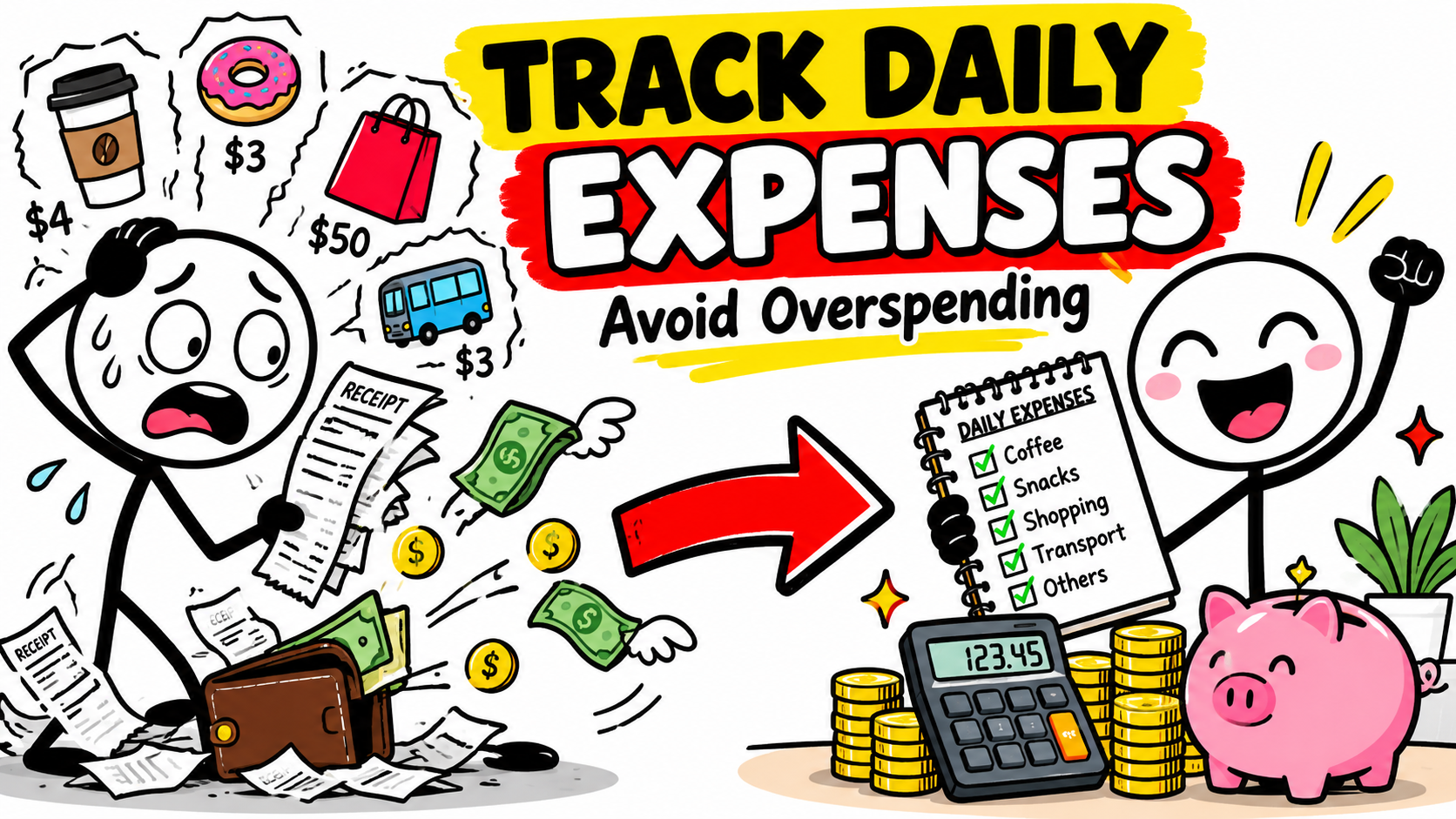
One simple way to manage your money better is to track your daily expenses.
Tracking your expenses helps you understand where your money goes, avoid unnecessary spending, and save more money each month.
The good news is that you do not need special financial skills or expensive applications to get started.
In this article, you will learn 10 easy ways to track your daily expenses and avoid overspending.
1. Understand Why Tracking Your Expenses Is Important
Before you start tracking your money, it is important to understand why this habit matters.
Many people know how much money they earn each month but do not know exactly how much they spend.
For example, you may spend $3 on a drink, $5 on lunch, and $2 on snacks during the day.
Each purchase seems small, but together they cost $10.
If you spend $10 every day for 30 days, your total spending will reach $300.
Of course, some of these expenses are necessary. The goal is not to stop spending money on everything.
Instead, tracking your expenses helps you identify which purchases are important and which ones you can reduce.
When you understand your spending habits, making better financial decisions becomes easier.
2. Write Down Everything You Spend
The easiest way to track daily expenses is to write down every purchase.
You can use a small notebook, a spreadsheet, or a note-taking application on your phone.
Every time you spend money, record the amount and what you purchased.
For example:
| Daily Expenses | Amount |
|---|---|
| Breakfast | $2.00 |
| Lunch | $3.50 |
| Transportation | $2.00 |
| Snacks | $1.50 |
| Drinking water | $0.50 |
| Total | $9.50 |
In this example, your total spending for one day is $9.50.
By writing down your expenses, you can easily see where your money goes.
Try to record your purchases immediately or at the end of each day.
The most important thing is to be honest with yourself about your spending.
Do not ignore small purchases because they are part of your daily expenses.
3. Separate Your Needs From Your Wants
One common reason people overspend is that they have difficulty separating needs from wants.
Understanding the difference can help you make smarter financial decisions.
What Are Needs?
Needs are things you must pay for to live and meet your basic responsibilities.
Examples include:
- Rent or housing
- Basic food and groceries
- Water and electricity
- Transportation to work
- Essential medical expenses
- Required debt payments
These expenses should normally be your first priority.
What Are Wants?
Wants are things you enjoy but can usually live without.
Examples include:
- Buying extra clothes
- Ordering food for convenience
- Purchasing expensive drinks
- Buying new phone accessories
- Paying for entertainment subscriptions
- Shopping for fun
There is nothing wrong with spending money on things you enjoy.
However, when your income is limited, you should make sure your basic needs are covered first.
Before buying something, ask yourself:
“Do I really need this, or do I just want it?”
This simple question can help you avoid unnecessary purchases.
4. Set a Daily Spending Limit
Setting a daily spending limit is another useful way to control your money.
A daily limit tells you how much you can spend on flexible expenses without going over your budget.
For example, imagine you have $150 available for food, snacks, and other daily purchases during the next 30 days.
You can calculate your average daily spending allowance:
$150 ÷ 30 days = $5 per day
This means your average budget is $5 per day.
However, you do not have to spend exactly $5 every day.
Some days you may spend $3, while other days you may need $7.
What matters is staying within your total budget.
Keep rent, bills, debt payments, and other fixed expenses in separate budget categories so they do not use up your daily spending allowance.
A daily spending limit can help you think carefully before making unnecessary purchases.
5. Use a Simple Expense Tracking Method
You do not need complicated tools to manage your daily expenses.
Choose a method that is easy for you to follow.
Method 1: Use a Notebook
A notebook is one of the simplest ways to track spending.
Write down the date, item purchased, amount, and total spending.
This method is useful if you prefer writing by hand.
Method 2: Use Your Phone
You can use the notes application on your phone to record daily expenses.
For example:
Monday:
- Breakfast: $2
- Lunch: $3
- Transportation: $2
- Snacks: $1
Total: $8
This method is convenient because you can update your records anywhere.
Method 3: Use a Spreadsheet
A spreadsheet can help you organize your spending.
You can create columns for:
- Date
- Expense category
- Description
- Amount
- Payment method
You can also use formulas to calculate your total spending automatically.
Choose whichever method works best for you. The important thing is to use it regularly.
6. Review Your Spending Every Week
Tracking expenses is helpful, but reviewing them is just as important.
At the end of each week, spend a few minutes checking your records.
Look at how much you spent on food, transportation, entertainment, and other purchases.
Ask yourself:
- Did I spend more than I planned?
- Which expenses were necessary?
- Did I buy things I did not need?
- What can I reduce next week?
- Am I staying within my monthly budget?
For example, you may notice that you spent $20 on snacks during one week.
If you reduce that amount to $10 per week, you could save approximately $40 over four weeks.
Small adjustments like this can help improve your financial habits.
Remember that the goal is not to remove every enjoyable purchase. It is to find a balance between spending and saving.
7. Avoid Impulse Buying
Impulse buying happens when you purchase something without planning.
For example, you might see a discount online and immediately buy a product because the price looks attractive.
However, even discounted items cost money.
Buying something you do not need can still hurt your budget.
One simple way to control impulse buying is to follow the 24-hour rule.
When you want to buy a nonessential item, wait at least 24 hours before making the purchase.
During this time, think about whether you truly need it.
You may realize that the item is not important after all.
For more expensive items, waiting several days can give you more time to compare prices and consider your decision.
This habit can help you spend less on unnecessary purchases.
8. Plan Your Purchases Before Shopping
Shopping without a plan is another common cause of overspending.
When you visit a supermarket or local market, you may see many attractive products.
Without a shopping list, it can be easy to buy more than you need.
Before shopping, write down everything you plan to purchase.
For example:
Weekly Grocery List:
- Rice
- Eggs
- Vegetables
- Meat or other protein
- Cooking oil
- Basic household supplies
Check what you already have at home before adding items to your list.
You can also compare prices and choose more affordable products when the quality meets your needs.
A shopping list helps you focus on necessary purchases and reduce food waste.
It can also make shopping faster and less stressful.
9. Pay Attention to Small Daily Expenses
Small expenses are easy to ignore because they do not seem expensive.
However, spending a few dollars every day can make a big difference over time.
Consider these examples:
| Daily Spending | 30-Day Total |
|---|---|
| $1 | $30 |
| $2 | $60 |
| $3 | $90 |
| $5 | $150 |
| $10 | $300 |
These figures assume you spend the same amount every day for 30 days.
For example, spending $3 daily on optional purchases adds up to $90 in 30 days.
If you cut that spending in half, you could keep $45 for other needs or savings.
You do not need to stop buying everything you enjoy.
Instead, look for small expenses that you can comfortably reduce.
Even small changes can make your monthly budget easier to manage.
10. Make a Realistic Monthly Budget
Tracking your daily expenses becomes more useful when you have a monthly budget.
A budget helps you plan your money before spending it.
Start by calculating your total monthly income.
Next, list your important expenses, including housing, food, utilities, transportation, and debt payments.
Then decide how much money you can use for other purchases and savings.
Here is an example of a monthly budget for someone earning $500.
| Budget Category | Monthly Amount |
|---|---|
| Rent | $180 |
| Food and groceries | $130 |
| Transportation | $50 |
| Electricity and water | $35 |
| Phone and internet | $20 |
| Debt payments | $40 |
| Personal spending | $25 |
| Savings | $20 |
| Total | $500 |
This is only an example. Your actual expenses may be higher or lower depending on your living situation.
If you cannot afford to save money every month, focus on paying for essential needs first.
A realistic budget should help you manage money without creating unnecessary financial pressure.
Common Mistakes to Avoid When Tracking Expenses
Tracking daily expenses is simple, but some mistakes can make it less effective.
1. Forgetting small purchases: Even a $1 purchase should be recorded because small expenses add up.
2. Not checking your spending records: Writing expenses without reviewing them makes it harder to find opportunities to save.
3. Setting unrealistic limits: A budget that is too strict can be difficult to follow.
4. Ignoring unexpected expenses: Medical bills, repairs, and other emergencies can affect your monthly spending. Try to plan for these costs when possible.
5. Giving up after overspending: Everyone can have a difficult financial week. Instead of giving up, adjust your spending plan and continue tracking.
Avoiding these mistakes can help you build better money habits over time.
How to Start Tracking Your Expenses Today
If you have never tracked your spending before, start with a simple seven-day plan.
| Day | What to Do |
|---|---|
| Day 1 | Write down all your purchases. |
| Day 2 | Continue tracking every expense. |
| Day 3 | Separate necessary expenses from optional purchases. |
| Day 4 | Check how much you have spent so far. |
| Day 5 | Identify one unnecessary expense you can reduce. |
| Day 6 | Try to stay within your daily budget. |
| Day 7 | Review your spending and plan for next week. |
You do not need to make big changes immediately.
The purpose of this plan is to help you understand your spending habits.
After seven days, continue tracking your expenses for the rest of the month.
Over time, you may find it easier to manage your money and avoid overspending.
Learning how to track your daily expenses is one of the simplest ways to improve your money management skills.
You do not need a high income, expensive tools, or special financial knowledge to get started.
Begin by writing down what you spend every day. Separate your needs from your wants, create a realistic budget, and review your spending regularly.
Remember that small expenses matter. Reducing unnecessary purchases can help you keep more money for important needs and future savings.
The goal is not to stop spending money. The goal is to spend wisely and make better financial decisions.
Start tracking your expenses today. With patience and consistent habits, you can gain more control over your money and build a healthier financial future.