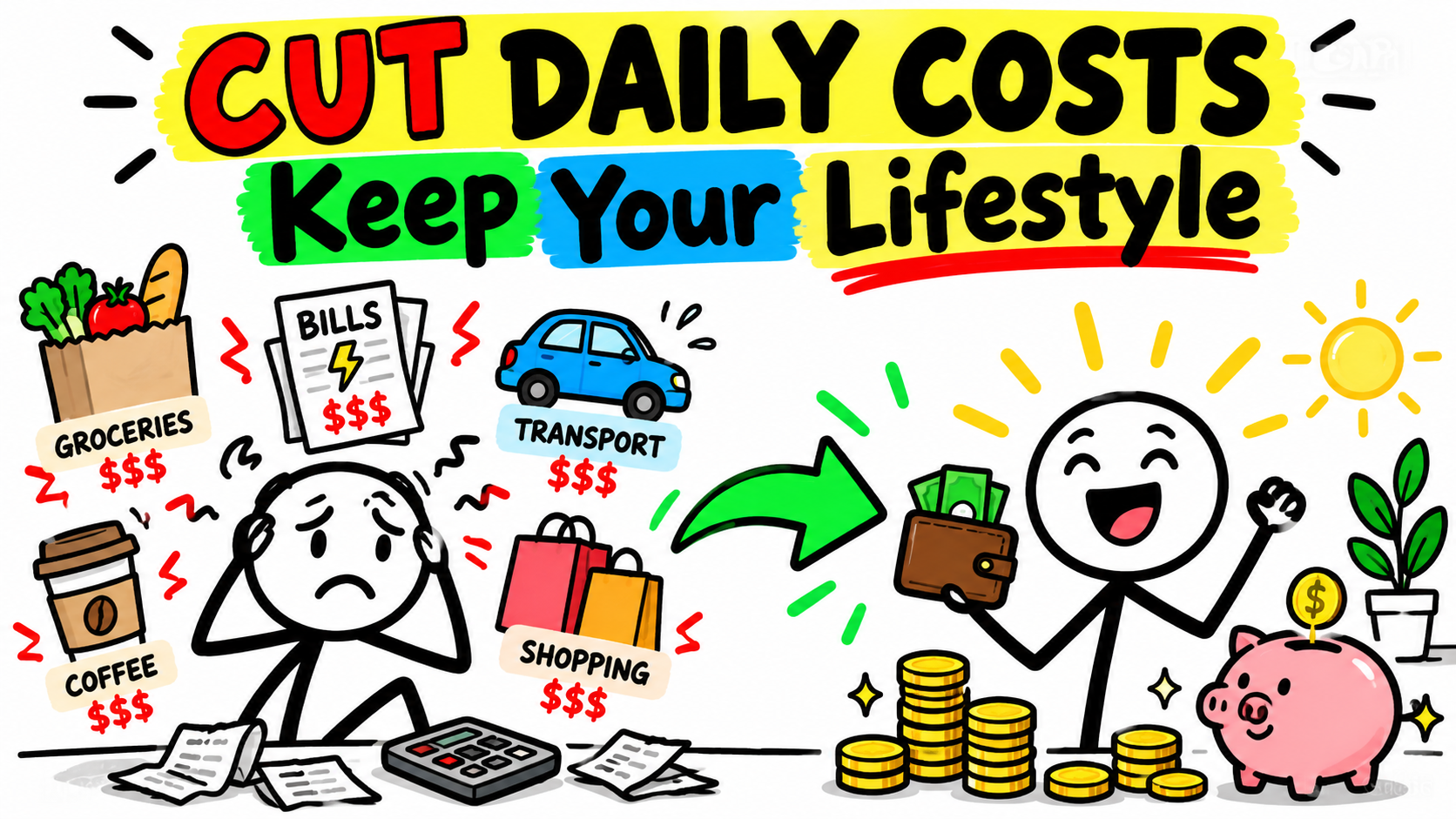
Everyone wants to save money, but nobody wants to give up everything they enjoy. With the rising cost of food, housing, transportation, and other daily needs, managing money can feel difficult.
Many people believe that saving money means living a boring life. They think they must stop eating out, cancel their favorite activities, or buy only the cheapest products.
However, saving money does not always mean making big sacrifices.
You can reduce everyday expenses while still enjoying a comfortable lifestyle. The key is to spend your money wisely and avoid paying more than necessary.
In this article, we will explore 12 simple and practical ways to lower your daily expenses without giving up the things that make you happy.
1. Understand Where Your Money Goes
Before you can reduce expenses, you need to understand how you spend your money.
Many people spend small amounts every day without realizing how quickly those expenses add up.
For example, you might spend money on:
- Food and drinks
- Transportation
- Groceries
- Online shopping
- Entertainment
- Mobile phone services
- Monthly subscriptions
These expenses may look small individually, but together they can take a large part of your income.
What can you do?
Start by tracking your daily spending for one month.
You can use a notebook, a spreadsheet, or a free budgeting app.
At the end of the month, review your expenses and identify areas where you could spend less.
You may be surprised to discover how much money goes toward purchases you barely remember.
The goal is not to stop spending money. It is to make sure your money goes toward things that truly matter to you.
2. Plan Your Grocery Shopping
Groceries are a necessary expense, but poor shopping habits can make them more expensive.
One simple way to save money is to plan your shopping before visiting the supermarket or local market.
First, check what food you already have at home.
Next, make a list of the ingredients you need for the coming week.
Try to buy only the items on your list.
Here are some other useful tips:
- Compare prices between different stores.
- Choose seasonal fruits and vegetables.
- Look for discounts on products you regularly use.
- Consider store-brand products when the quality is similar.
- Avoid buying too much food that may expire.
- Compare unit prices rather than package prices alone.
For example, if you normally spend $50 per week on groceries, reducing that amount to $45 could save you around $20 over four weeks.
That is money you can use for savings or other important needs.
You can still enjoy your favorite meals. You simply need to shop more carefully.
3. Cook at Home More Often
Eating at restaurants and ordering food can be convenient, especially after a busy day.
However, doing this frequently can increase your monthly expenses.
Cooking at home is often cheaper because you can buy ingredients in larger quantities and use them for several meals.
For example, a restaurant meal might cost $6, while a similar homemade meal may cost around $3, depending on ingredients and local prices.
Choosing the homemade option three times a week could save about $9 per week.
Over four weeks, that would be $36 in savings.
This does not mean you should stop visiting restaurants.
You can still enjoy eating out occasionally.
Try cooking at home on weekdays and planning a restaurant meal on the weekend.
This way, you can control your spending without giving up the experience of dining out.
4. Reduce Electricity and Water Bills
Electricity and water are important parts of everyday life.
However, using them more efficiently can help lower your monthly bills without making your home uncomfortable.
Simple actions include:
- Turning off lights when they are not needed.
- Using LED light bulbs.
- Unplugging devices that consume unnecessary standby power.
- Using fans when the weather is comfortable.
- Setting your air conditioner to a reasonable temperature.
- Fixing leaking taps and pipes.
- Using washing machines with appropriately sized loads.
For example, turning off unnecessary lights and reducing air conditioner use may help lower your electricity bill.
The exact savings will depend on your energy prices, appliances, and usage.
You do not need to stop using electricity or water. Just avoid wasting them.
Small changes at home can make a difference over time.
5. Review Your Monthly Subscriptions
Many people subscribe to services and forget that they are paying for them.
These services may include:
- Video streaming platforms
- Music streaming services
- Fitness apps
- Online learning platforms
- Cloud storage
- Premium mobile applications
Each subscription may seem affordable, but several monthly payments can add up quickly.
For example, imagine you pay for three services costing $5 each.
That is $15 per month or $180 per year.
If you rarely use one of those services, canceling it would save $60 per year.
You can also consider using free versions of applications when they meet your needs.
Keep the services that bring value to your life and remove the ones you rarely use.
This allows you to enjoy entertainment and technology without wasting money.
6. Choose Affordable Transportation
Transportation is another common daily expense.
Whether you drive, use public transportation, or take a taxi, travel costs can affect your monthly budget.
Fortunately, there are several ways to spend less on transportation.
Consider these ideas:
- Walk for short distances when it is safe and practical.
- Use public transportation when available.
- Share rides with friends or coworkers when convenient.
- Combine several errands into one trip.
- Keep your vehicle properly maintained.
- Compare transportation options before traveling.
For example, if you spend $4 per day on transportation and find a way to reduce it to $3, you could save around $22 over 22 working days.
You do not need to stop traveling or enjoying activities outside your home.
The goal is to choose transportation options that fit your needs and budget.
7. Buy Quality Products Instead of Cheap Products
Buying the cheapest item is not always the best way to save money.
Some low-cost products may wear out quickly, forcing you to replace them more often.
In certain cases, buying a slightly more expensive but durable product can save money over time.
For example, imagine two pairs of shoes:
- Pair A costs $15 and lasts six months.
- Pair B costs $30 and lasts two years.
If both perform equally well, Pair B may offer better long-term value.
However, higher prices do not always mean better quality.
Before buying, compare product reviews, materials, warranties, and expected lifespan.
Try to focus on value rather than price alone.
A good purchase is something that meets your needs and lasts a reasonable amount of time.
8. Avoid Impulse Buying
Have you ever bought something because it looked attractive or was on sale?
This is called impulse buying.
It happens when you make a purchase without planning or considering whether you really need the item.
Online shopping makes impulse buying especially easy.
You may see advertisements, limited-time discounts, or special promotions that encourage you to buy immediately.
To control impulse spending, try using the 24-hour rule.
When you want something that is not essential, wait at least 24 hours before purchasing it.
During that time, ask yourself:
- Do I really need this?
- Will I use it regularly?
- Can I afford it without affecting important expenses?
- Is there a better alternative?
After waiting, you may decide the product is not necessary.
You can still buy things you love, but planning your purchases helps prevent regret and unnecessary spending.
9. Enjoy Free or Low-Cost Entertainment
Entertainment is important because it helps us relax and enjoy life.
However, having fun does not always require spending a lot of money.
There are many affordable activities you can enjoy with friends, family, or by yourself.
Some examples include:
- Visiting public parks
- Watching movies at home
- Exercising outdoors
- Reading books
- Cooking meals with family
- Playing games with friends
- Attending free community events
- Exploring local attractions
Instead of spending money on expensive entertainment every weekend, try mixing paid activities with free ones.
For example, you might enjoy one restaurant visit and one free outdoor activity each week.
You can maintain an enjoyable social life while reducing expenses.
Remember, happiness does not always depend on how much money you spend.
10. Compare Prices Before Making Purchases
Comparing prices is one of the simplest ways to avoid overspending.
Different stores may sell the same product at different prices.
Before purchasing expensive items, take a few minutes to compare your options.
This is especially useful when buying:
- Electronics
- Household appliances
- Furniture
- Clothing
- Internet packages
- Mobile phone plans
For example, if one store sells a product for $100 and another offers the same product for $90, choosing the cheaper option saves $10.
However, remember to consider delivery fees, warranties, product quality, and return policies.
The lowest advertised price is not always the lowest total cost.
Comparing prices helps you make smarter buying decisions without changing your lifestyle.
11. Set a Weekly Spending Limit
A weekly spending limit can help you control expenses without following a complicated budget.
First, calculate your monthly income.
Then subtract essential expenses such as rent, food, bills, debt payments, and planned savings.
The amount left can be used for flexible spending.
For example, if you have $120 available for nonessential spending over four weeks, you could set a limit of $30 per week.
You can use that money for snacks, entertainment, shopping, or other personal activities.
If you spend less than your limit one week, you can save the difference or carry it into the next week.
This method allows you to enjoy your money while maintaining control over your finances.
Just remember that your spending limit should be realistic and fit your income.
12. Build Better Money Habits
Saving money is not only about cutting expenses.
It is also about building habits that help you make better financial decisions.
Simple habits can make money management easier over time.
Try to:
- Check your spending regularly.
- Plan major purchases in advance.
- Pay bills on time to avoid late fees.
- Save a small amount when possible.
- Avoid unnecessary borrowing.
- Review your budget at the end of each month.
You do not need to change everything immediately.
Start with one or two habits and slowly improve.
For example, you might begin by tracking your expenses this month and planning your groceries next month.
Small improvements can become part of your normal routine.
Over time, these habits can help you feel more confident about your money.
How Much Can You Save by Reducing Everyday Expenses?
The amount you can save depends on your income, spending habits, and living costs.
Here is a simple example of possible monthly savings:
| Expense Category | Possible Monthly Savings |
|---|---|
| Grocery shopping | $20 |
| Cooking at home | $30 |
| Electricity and water | $5 |
| Unused subscriptions | $10 |
| Transportation | $15 |
| Impulse shopping | $20 |
| Total Potential Savings | $100 |
These numbers are examples, not guaranteed savings.
If you were able to save $100 every month, that would equal $1,200 in one year.
Even saving half that amount could make a meaningful difference.
You could use the extra money to build an emergency fund, pay off debt, or prepare for future expenses.
The important thing is to focus on changes that are realistic for your situation.
How to Reduce Expenses Without Feeling Restricted
One of the biggest mistakes people make when trying to save money is cutting too many expenses at once.
This can make budgeting feel stressful and difficult to maintain.
Instead, focus on balance.
Identify the things you truly enjoy and keep room for them in your budget when possible.
For example, if spending time at a café with friends makes you happy, you do not necessarily need to stop completely.
You could visit less often, choose less expensive items, or reduce spending in another area.
The same idea applies to hobbies, entertainment, and shopping.
Good money management is about spending less on things that matter less, so you can afford the things that matter more.
A budget should support your lifestyle, not make your life unnecessarily difficult.
Final Thoughts
Reducing everyday expenses does not mean you have to stop enjoying life.
You can still eat your favorite food, spend time with friends, travel when your budget allows, and enjoy entertainment.
The difference is learning how to spend more carefully.
Simple habits such as planning groceries, cooking at home, comparing prices, and avoiding unnecessary purchases can help reduce monthly expenses.
You do not need to make big changes overnight.
Start with one small improvement and continue building better financial habits.
The goal is not to spend as little money as possible. It is to use your money in a way that supports both your present lifestyle and your future financial goals.
With a little planning and consistency, you can reduce financial stress, save more money, and still enjoy the things that make life meaningful.
2 thoughts on “How to Reduce Everyday Expenses: 12 Simple Ways to Save”