Saving money does not always mean making big changes to your life. Sometimes, the small things you buy every day can have the biggest impact on your monthly budget.
Think about how often you spend money on drinks, snacks, food delivery, or things you do not really need. Each purchase may seem small, but these costs can add up over time.
For example, spending just $2 every day adds up to about $60 in 30 days. That is money you could use for groceries, bills, or savings.
The good news is that you do not have to give up everything you enjoy to save money. You simply need to understand your spending habits and make better choices.
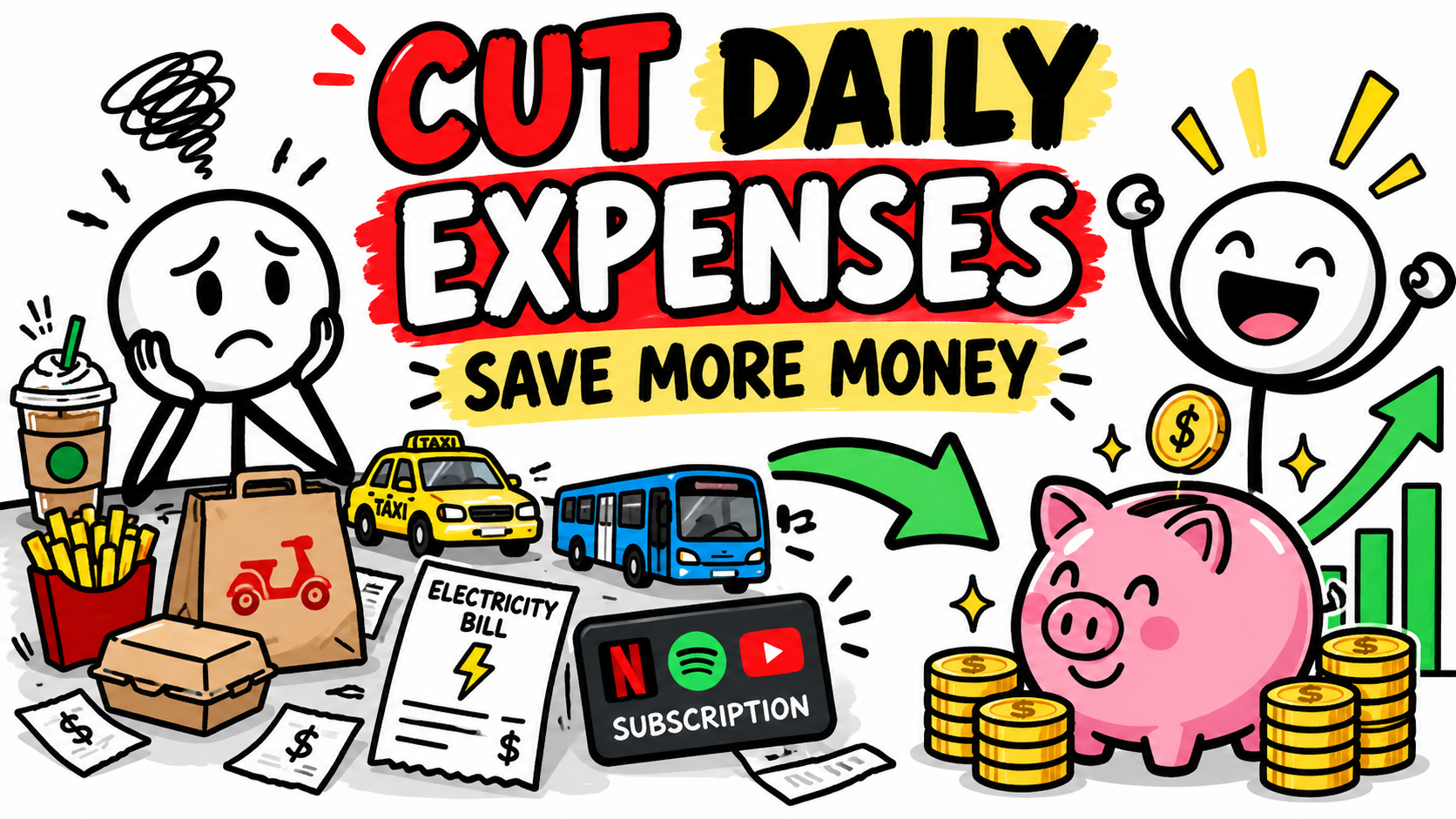
In this article, we will look at 15 daily expenses you can reduce to save more money every month. These tips are simple, practical, and suitable for people who want to manage their money better.
1. Buying Drinks Every Day
Buying drinks outside your home is a common daily expense.
A drink may cost only $2 or $3, but buying one every day can become expensive.
For example, if you spend $2 on drinks every day, you could spend around $60 in one month.
You can reduce this expense by preparing drinks at home and carrying them in a reusable bottle.
You do not have to stop buying your favorite drinks completely. You can simply buy them less often.
Money-saving tip: Try limiting purchased drinks to once or twice a week instead of every day.
2. Eating Lunch at Restaurants
Eating outside is convenient, especially when you are busy with work or school.
However, buying lunch every day can cost more than preparing food at home.
For example, if you spend $5 on lunch during 20 working days, your total lunch spending will be $100 per month.
Preparing lunch at home may cost less, depending on the ingredients you use.
You can cook extra food in the evening and pack some for lunch the next day.
This can also help you reduce food waste.
Money-saving tip: Bring homemade lunch to work two or three days a week to start.
3. Paying Food Delivery Fees
Ordering food online can save time, but delivery fees and service charges can increase the final price.
Sometimes, a meal that costs $6 may cost $9 after adding delivery and other fees.
If you order food several times a week, these extra charges can become a large monthly expense.
To reduce this cost, try cooking at home more often.
If you want to order food, compare the total prices before confirming your purchase.
You can also collect food yourself when it is safe, convenient, and cheaper.
Money-saving tip: Set a weekly limit for food delivery spending.
4. Buying Snacks Every Day
Snacks are another expense that people often overlook.
Chips, biscuits, sweets, and other small treats may not seem expensive individually.
However, spending $1.50 on snacks every day could cost $45 over 30 days.
One simple solution is to plan your snacks before leaving home.
You can bring fruit, homemade sandwiches, or other affordable foods.
Buying larger packages and dividing them into smaller portions may also be cheaper when you can use everything before it expires.
Money-saving tip: Give yourself a small weekly snack budget and try to stay within it.
5. Buying Bottled Water
Buying bottled water regularly can be expensive.
For example, spending $1 per day on bottled water adds up to about $30 per month.
Using a reusable bottle can help reduce this expense.
If you have access to safe drinking water at home, fill your bottle before going outside.
In places where tap water is not safe to drink, use properly treated or filtered water from a reliable source.
You should never reduce your spending by drinking unsafe water.
Money-saving tip: Carry safe drinking water from home whenever possible.
6. Shopping at Convenience Stores Too Often
Convenience stores are useful when you need something quickly.
However, some products can cost more than they do at supermarkets or local markets.
For example, you might pay extra for small packages of food, household supplies, or personal care products.
Instead of buying these items every day, try making a weekly shopping list.
Compare prices and buy the products you regularly use from affordable stores.
Money-saving tip: Plan your shopping ahead so you do not have to make expensive last-minute purchases.
7. Making Impulse Purchases
Have you ever bought something because it looked interesting, even though you did not plan to buy it?
This is called impulse buying.
It can happen at shopping malls, supermarkets, or online stores.
A phone case, small gadget, or clothing item may seem affordable, but repeated purchases can reduce your savings.
A simple way to control impulse buying is to wait before purchasing nonessential items.
For example, use the 24-hour rule.
If you still need the product after 24 hours, check whether it fits your budget.
Money-saving tip: Avoid shopping online when you are bored or simply looking for something to buy.
8. Throwing Away Food
Food waste is not only bad for the environment. It also wastes money.
When you throw away food, you are throwing away part of the money you spent buying it.
Food waste often happens when people buy too many groceries, cook too much, or forget what they have in the refrigerator.
To avoid this problem, plan your meals and buy only what you expect to use.
Store food properly and use leftovers while they are still safe to eat.
Money-saving tip: Check your refrigerator before shopping and plan meals around ingredients you already have.
9. Spending Too Much on Transportation
Transportation is an important expense, especially if you travel to work or school every day.
However, some transportation costs can be reduced with better planning.
For example, using a taxi for a short trip may cost more than walking or using public transportation.
If your location allows it, consider walking for short distances or using affordable public transport.
You can also combine several errands into one trip.
Remember to consider your safety, the weather, and your available time.
Money-saving tip: Plan your weekly travel to avoid unnecessary trips.
10. Using Too Much Electricity
Electricity is another household expense that can affect your monthly budget.
Leaving lights, fans, air conditioners, or other appliances running when they are not needed can increase electricity use.
Small changes can help reduce your bill.
For example:
- Turn off lights when leaving a room.
- Use natural daylight when possible.
- Switch off fans when nobody is using them.
- Choose energy-efficient light bulbs.
- Keep air conditioners at a comfortable, energy-saving setting.
- Avoid leaving appliances running unnecessarily.
These habits may help you reduce electricity expenses over time.
Money-saving tip: Check which appliances use the most electricity in your home and look for practical ways to use them less.
11. Paying for Subscriptions You Rarely Use
Many people subscribe to streaming platforms, music services, mobile applications, or other online services.
Although these subscriptions are usually billed monthly, they are part of your everyday living costs.
A $5 subscription may seem cheap, but three subscriptions at that price cost $15 per month.
That adds up to $180 in one year.
Review your subscriptions and decide which services you actually need.
Cancel services you rarely use, especially if they renew automatically.
Money-saving tip: Check your bank or payment history once a month for forgotten subscriptions.
12. Spending Too Much on Mobile Data
Mobile internet is important for communication, work, and entertainment.
However, purchasing extra mobile data packages frequently can become expensive.
Some people spend more because they stream videos or download large files using mobile data.
You can control this expense by choosing a mobile plan that fits your needs.
Use trusted Wi-Fi networks when available and avoid unnecessary background data usage.
You can also download videos or other files using a suitable Wi-Fi connection before leaving home.
Money-saving tip: Check your monthly data usage before choosing a phone package.
13. Buying Expensive Brand-Name Products
Popular brands are not always the cheapest option.
Sometimes, you can find similar products at lower prices.
This is especially true for everyday items such as soap, cleaning products, tissues, and some groceries.
Before choosing a product, compare its price, quantity, and quality.
For example, a less expensive cleaning product may work just as well for your needs.
However, do not choose cheaper products if they are unsafe or poor quality.
Money-saving tip: Compare the price per unit instead of only looking at the package price.
14. Paying Unnecessary Bank and Payment Fees
Small bank and payment fees can slowly reduce your money.
These may include ATM withdrawal fees, money transfer charges, and account service fees.
For example, paying $1 in unnecessary fees five times a month costs $5.
Over one year, that becomes $60.
You may be able to reduce these costs by using lower-fee payment methods or choosing a bank account that better suits your needs.
Always check the terms and fees before opening or changing an account.
Money-saving tip: Review your bank charges regularly and avoid unnecessary transactions that carry extra fees.
15. Buying Things Just Because They Are on Sale
Sales and discounts can help you save money when you buy something you already need.
However, discounts can also encourage unnecessary purchases.
For example, a shirt that normally costs $20 may be on sale for $12.
You might think you saved $8.
But if you did not need the shirt, you still spent $12 unnecessarily.
Before buying discounted items, ask yourself whether they are included in your budget.
A lower price does not always mean a good purchase.
Money-saving tip: Make a shopping list before looking at promotions or online sales.
How Much Money Can You Save by Cutting Small Expenses?
You may be surprised by how quickly small savings add up.
Here is an example of how reducing a few daily expenses could help your monthly budget.
| Expense Reduced | Monthly Savings |
|---|---|
| Drinks purchased outside | $15 |
| Restaurant lunches | $20 |
| Snacks | $10 |
| Food delivery fees | $12 |
| Impulse purchases | $15 |
| Unused subscriptions | $5 |
| Transportation | $10 |
| Total Potential Savings | $87 |
These numbers are only examples. Your actual savings will depend on your current spending and the changes you make.
If you manage to save $87 every month, you could save $1,044 in one year, assuming you keep the money and do not spend it elsewhere.
You do not need to reduce every expense at once.
Even saving an extra $10 or $20 per month can make a difference.
5 Simple Habits to Help You Spend Less Every Day
Reducing expenses becomes easier when you build better daily habits.
Here are five simple habits you can start today.
1. Track your daily spending
Write down everything you buy, even small items. You can use a notebook, phone app, or simple spreadsheet.
2. Set a daily spending limit
Decide how much you can afford to spend on nonessential purchases. Make sure your budget still covers important needs.
3. Plan before shopping
Create a list and avoid buying products you do not need.
4. Review your spending every week
At the end of each week, check where your money went. Look for areas where you can spend less.
5. Save the money you do not spend
If you avoid an unnecessary purchase, consider transferring that amount into your savings account.
These habits can help you become more aware of your money without making your life too complicated.
Why Small Expenses Matter When You Have a Low Income
If you earn a low income, every dollar is important.
After paying for housing, food, transportation, and other essential needs, you may have little money left.
That is why understanding small expenses can be helpful.
You may not be able to reduce rent or other fixed bills immediately, but you might have more control over some daily purchases.
For example, buying fewer snacks or preparing lunch at home may help you create a little extra room in your budget.
However, it is important to be realistic.
Not everyone can save money simply by cutting small expenses. If your income is already lower than your basic living costs, you may need additional income, financial assistance, or a different plan to improve your situation.
Saving money should not mean skipping necessary meals, avoiding medical care, or giving up other basic needs.
The goal is to reduce unnecessary spending while maintaining a healthy and comfortable life.
Where Should You Put the Money You Save?
After reducing daily expenses, think about what you want to do with the extra money.
One good option is to build an emergency fund.
An emergency fund is money reserved for unexpected situations, such as urgent repairs, medical expenses, or temporary income loss.
You can start with a small target that fits your financial situation.
For example, you might aim to save your first $50 or $100.
You can then increase your goal gradually.
If you have high-interest debt, using some of your extra money to reduce that debt may also help you save on interest charges.
Try to keep savings separate from money used for everyday spending, if possible.
This can make it easier to avoid spending the money accidentally.
Final Thoughts
Saving more money does not always require a higher income or a complete lifestyle change.
Sometimes, it starts with small decisions you make every day.
Reducing unnecessary purchases, preparing meals at home, avoiding extra fees, and planning your shopping can help you control your spending.
Remember that you do not need to cut all 15 expenses immediately.
Start with three expenses you can easily reduce and track how much you save over the next 30 days.
Once those changes become habits, you can look for other ways to improve your budget.
The goal is not to stop spending money completely. It is to use your money wisely and make sure it supports the things that matter most to you.
With a realistic plan and consistent habits, small savings can gradually help you build a stronger financial future.