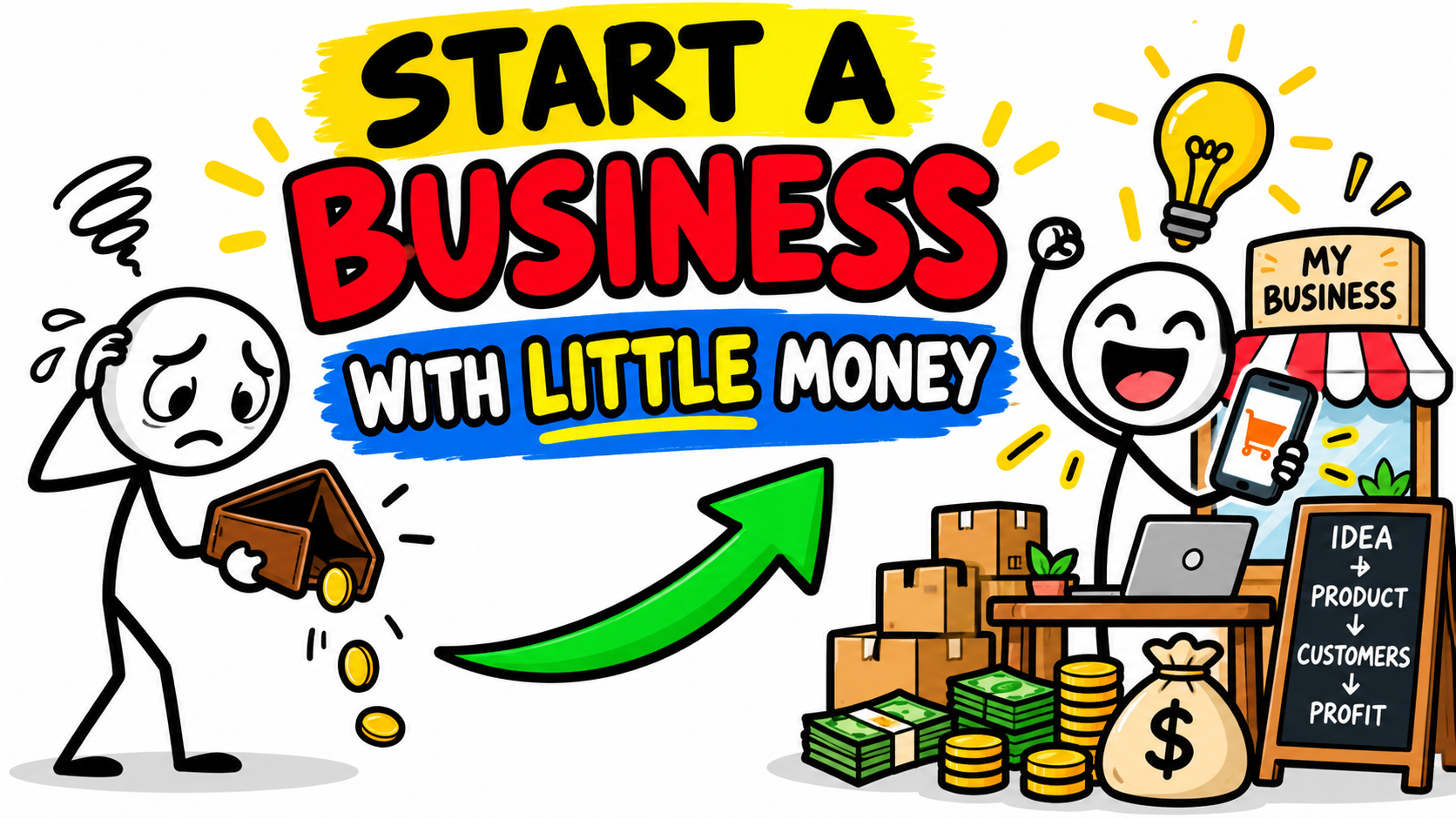
Starting a small business is a dream for many people. However, one of the biggest problems is money. Many people believe they need thousands of dollars to start a business.
The good news is that you do not always need a lot of money to start a small business.
Some businesses can begin with basic tools, simple skills, and a small budget. You can even start from home without renting an office or hiring employees.
What matters most is choosing the right business idea, understanding your customers, and managing your money carefully.
In this article, you will learn how to start a small business with very little money, find affordable business ideas, and avoid common mistakes.
1. Choose a Business That Costs Little to Start
The first step is choosing a business that matches your budget.
Some businesses require expensive equipment, office space, or large amounts of inventory. These may not be suitable when you have limited savings.
Instead, look for a business that uses the skills, tools, or resources you already have.
For example, if you are good at cooking, you might consider selling homemade food. If you know how to design pictures or write articles, you could offer your services online.
Here are some affordable small business ideas:
- Freelance writing: Write articles or website content for clients.
- Online tutoring: Teach subjects or skills you understand well.
- Homemade food: Prepare and sell meals or snacks locally.
- Cleaning services: Offer cleaning services to homes or small offices.
- Social media management: Help local businesses manage their social media pages.
- Graphic design: Create posters, logos, and simple marketing materials.
- Selling handmade products: Make and sell crafts or simple accessories.
- Reselling used items: Buy and resell secondhand products when you can do so profitably.
The best business idea is not always the most popular one. It is the one you can realistically start and manage with your available resources.
2. Start With Skills You Already Have
One of the easiest ways to reduce business costs is to use skills you already know.
For example, you may be good at repairing things, cooking, teaching, writing, photography, or using computers.
These skills can become useful services that other people are willing to pay for.
Imagine that you are good at making simple birthday cakes. Instead of opening a bakery immediately, you could start by accepting a few orders from friends or people in your community.
This approach allows you to test your business idea before investing too much money.
You may also learn new skills through free online tutorials, educational websites, or community training programs.
Remember, you do not need to become an expert in everything before starting. However, you should be able to provide a product or service safely and reliably.
3. Make a Simple Business Plan
A business plan helps you understand what you want to sell, who your customers are, and how your business will make money.
You do not need to write a long or complicated document.
A simple business plan can answer five questions:
- What product or service will I sell?
- Who will buy it?
- How much will it cost to start?
- How much should I charge?
- How will customers find my business?
For example, imagine you want to start a small homemade snack business.
Your plan might look like this:
| Business Details | Example |
|---|---|
| Business idea | Homemade snacks |
| Target customers | Students and local workers |
| Starting budget | $100 |
| Selling method | Local orders and social media |
| Main expenses | Ingredients, packaging, and delivery |
| First goal | Get 10 paying customers |
This is only an example. Actual startup costs depend on where you live, what you sell, and local requirements.
Having a simple plan can help you avoid unnecessary spending and stay focused on your goals.
4. Start Small Instead of Spending Too Much
Many new business owners make the mistake of spending too much money before earning their first income.
They may buy expensive equipment, order large amounts of products, or rent a shop without knowing whether customers will buy their products.
A better approach is to start small.
For example, if you want to sell clothes online, you could begin with a few items rather than buying hundreds of products.
If you want to start a cleaning business, you may be able to begin with basic cleaning supplies and expand as you gain customers.
Try to spend money only on things that are necessary to deliver your product or service.
You can improve your equipment, packaging, and business appearance later when you have more income.
Starting small can reduce financial pressure and help you learn from your customers.
5. Test Your Business Idea Before Investing More Money
Before spending your savings, find out whether people actually want your product or service.
Just because you think an idea is good does not mean customers will automatically buy it.
Start by talking to potential customers.
Ask them what they need, what problems they face, and how much they would reasonably pay for a solution.
For example, if you want to sell homemade lunch boxes, ask nearby workers whether they would be interested in buying affordable meals.
You could offer a small number of sample products or take a few orders first.
Pay attention to customer feedback.
If people like your product, return to buy again, and recommend it to others, that may be a positive sign.
However, if nobody wants to pay for it, consider changing your product, price, or target customers before spending more money.
Testing your idea helps you make better decisions.
6. Use Free Tools to Run Your Business
Technology makes it easier to start a small business without spending a lot of money.
Many useful online tools are available for free or offer basic free plans.
For example:
- Google Sheets: Track income, expenses, and customer orders.
- Canva: Create simple business posters and social media graphics.
- WhatsApp: Communicate with customers and answer questions.
- Facebook Pages: Share business updates and reach potential customers.
- Google Docs: Prepare price lists, business plans, and other documents.
Free plans may have limitations, but they can be enough for a small business that is just getting started.
You do not need to pay for every business tool immediately.
Choose simple tools that solve real problems and help you save time.
7. Promote Your Business Without Spending Much Money
Marketing is important because customers need to know your business exists.
However, promoting your business does not always require paid advertising.
You can begin by using free marketing methods.
For example, create a social media page and share clear pictures of your products or services.
Explain what you sell, how much it costs, and how customers can contact you.
You can also ask satisfied customers to recommend your business to friends or family.
Other affordable marketing ideas include:
- Posting useful content on social media.
- Sharing customer reviews with permission.
- Joining relevant local community groups where promotion is allowed.
- Offering a small introductory discount when affordable.
- Asking customers for honest feedback.
- Creating short videos that show your products or services.
For example, if you sell homemade cakes, you can post pictures of your cakes and show how customers can place an order.
Good marketing is not only about advertising. It is also about building trust and helping people understand what you offer.
8. Manage Your Business Money Carefully
Managing money is one of the most important parts of running a small business.
Even if your business makes sales, it can still lose money when expenses are too high.
You should track how much money comes in and how much goes out.
For example:
| Business Activity | Amount |
|---|---|
| Total sales | $300 |
| Ingredients or supplies | $120 |
| Packaging | $30 |
| Transportation | $20 |
| Other business expenses | $30 |
| Remaining profit before taxes and other costs | $100 |
In this example, the business makes $300 in sales but has only $100 remaining after the listed expenses.
That is why sales and profit are not the same thing.
Try to keep your business money separate from personal spending. A separate account can be useful where it is affordable and available.
Also, keep records of receipts, payments, and customer orders.
Good recordkeeping will help you understand whether your business is growing or losing money.
9. Avoid Borrowing Too Much Money
Some people believe they need to borrow money to start a business.
While borrowing may be useful in certain situations, it also creates financial responsibility.
You must repay the money, often with interest, even when your business is not making a profit.
For someone with limited income, this can create additional financial pressure.
Before taking a loan, consider whether you can begin with a smaller business idea.
You may be able to save a little money, use equipment you already own, or start with customer orders.
If you decide to borrow money, understand the interest rate, fees, repayment schedule, and risks.
Never assume your new business will make enough profit to repay a loan immediately.
Starting with less debt can make it easier to manage financial problems.
10. Understand Basic Business Rules
Even a small home business may need to follow certain laws and regulations.
The requirements depend on your country, location, and type of business.
For example, some businesses may need registration, licenses, tax records, or special permission to sell food or provide certain services.
Before starting, check with the appropriate local government office or official business information website.
You should also understand basic consumer protection rules and any safety requirements related to your products.
Taking care of these responsibilities early can help you avoid unexpected problems.
11. Focus on Getting Your First Customers
When starting a business, your first goal should not be becoming rich quickly.
Instead, focus on finding your first customers and giving them a good experience.
For example, if you offer a cleaning service, try to complete every job carefully and arrive on time.
If you sell products, make sure customers receive what they ordered.
Satisfied customers may return or recommend your business to others.
This can help you build trust and attract more customers over time.
You can also ask customers what they liked and what you could improve.
Customer feedback can help you make your business better.
12. Reinvest Some of Your Profits
When your business starts making money, you may be tempted to spend all the profit immediately.
However, setting aside some profit can help your business grow.
For example, if your business makes $100 in profit after accounting for its costs and obligations, you might choose to keep $30 for future business needs.
You could use that money to buy supplies, replace equipment, improve packaging, or promote your products.
Make sure you also consider taxes, personal needs, and emergency savings.
There is no single correct amount to reinvest.
The most important thing is to make a plan and avoid spending money that your business needs to continue operating.
How Much Money Do You Need to Start a Small Business?
The amount of money you need depends on the type of business.
Some service businesses can start with very little additional spending if you already own the necessary equipment.
Other businesses require more money for products, transportation, registration, or tools.
Here is an example of how someone might plan a $100 starting budget for a small product business.
| Starting Expenses | Budget |
|---|---|
| Basic supplies or materials | $40 |
| Packaging | $15 |
| Transportation | $10 |
| Simple marketing materials | $5 |
| Reserve for unexpected expenses | $30 |
| Total | $100 |
This example assumes you already have the necessary equipment and does not include possible registration fees, permits, or taxes.
The goal is to spend carefully and keep some money available for unexpected costs.
If you cannot afford $100, consider a business that allows you to sell your skills or services using resources you already have.
Common Mistakes to Avoid When Starting a Small Business
Starting a business involves risks, especially when money is limited.
Here are some common mistakes beginners should avoid.
Spending too much before getting customers: Buying expensive equipment before testing your business idea can waste money.
Not tracking income and expenses: Without financial records, it becomes difficult to know whether your business is profitable.
Setting prices too low: Your prices should consider materials, time, delivery, fees, and other business expenses.
Expecting quick success: Building a business often takes time. Some businesses may struggle or fail even with careful planning.
Ignoring customer feedback: Listening to customers can help you improve your products and services.
Mixing personal and business money: This can make it harder to understand your actual business results.
Avoiding these mistakes does not guarantee success, but it can help you make more informed decisions.
Final Thoughts
Starting a small business with very little money is possible, but it requires careful planning, patience, and effort.
You do not need to rent a large shop or buy expensive equipment to begin.
Start by choosing a simple business idea that matches your skills and budget.
Test whether customers are interested before spending too much money.
Use free tools, promote your business through affordable methods, and keep track of every expense.
Most importantly, focus on providing something useful to your customers.
A successful small business does not have to start big. It can begin with one simple idea, a few customers, and careful money management.
Progress may be slow, and success is never guaranteed. But by learning from your experience and making thoughtful decisions, you can give your small business a stronger foundation for the future.